
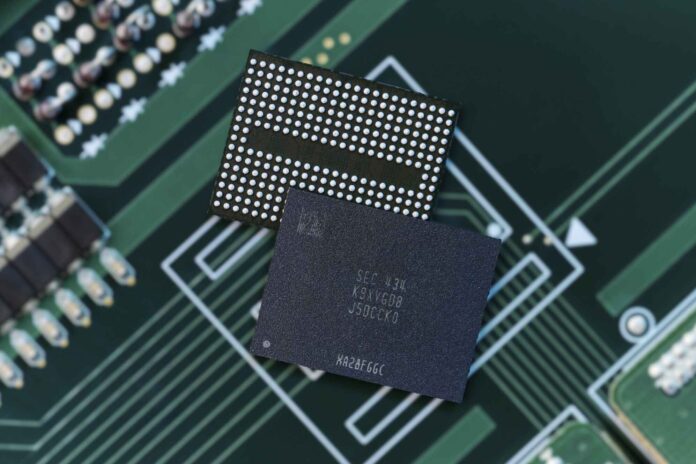
A global shortage of memory chips driven by surging demand from artificial intelligence data centers is spilling into China’s auto industry, forcing carmakers to absorb higher costs, lift some prices and rethink product plans as margins remain razor-thin.
The bottleneck centers on DRAM and NAND flash components used heavily in software‑defined vehicles for infotainment, driver‑assistance systems and in‑car AI. Leading memory suppliers have reallocated capacity toward high‑bandwidth memory (HBM) and DDR5 chips for hyperscale AI servers, leaving automakers scrambling for legacy commodity memory and facing steep price inflation.
Executives at Chinese EV makers have publicly flagged the pain. At recent product events, company leaders said much of the profit from technology upgrades has been eaten by supplier price increases, and apologized to customers for being unable to lower—or for having to raise—prices and trim financing offers. Several manufacturers have been forced to pass on modest markups: one domestic group raised the price of a mid‑tier assisted‑driving package by about 21%, while another added several thousand yuan to a lidar‑equipped SUV, citing surging global automotive‑grade chip costs.
Analysts and banks warn the shortage is unlikely to ease quickly. With hyperscalers funneling huge capital into AI data centers, demand for HBM and advanced server memory is expected to outstrip supply well into 2027. The auto sector accounts for a small share of total DRAM consumption and lacks the financial clout to secure preferential allocation, leaving carmakers vulnerable to “memflation” — sharp, sustained memory price increases that add hundreds to over a thousand dollars to the bill of materials for premium smart electric vehicles.
The problem is compounded by regulatory and technical factors. New safety rules in major markets have increased electronic and memory requirements for advanced driver‑assistance systems (ADAS), while modern centralized vehicle architectures and higher levels of autonomy can demand hundreds of gigabytes of memory per car. Automotive memory must also meet stringent AEC‑Q100 reliability tests, a lengthy certification process that prevents quick supplier switches.
Industry experts say automakers will pursue a mix of short‑ and long‑term responses. Immediate tactics include modest price increases, shifting to lower‑criticality consumer‑grade memory in some non‑safety systems, and architectural changes—such as zonal electronics—that reduce overall memory needs. Some manufacturers are negotiating directly with chipmakers or exploring investments in local memory capacity, although such capital‑intensive moves carry their own risks if market dynamics shift.
Market analysts expect the memory squeeze to reshape competitive behavior. Cost pressures may temper large‑scale price cuts and reduce promotional incentives, but the broader price war is unlikely to disappear, especially in entry‑level segments where firms still compete aggressively on price. Instead, competition may shift toward differentiation through intelligent driving features, product quality, safety and after‑sales service.
The distribution of pain will be uneven. Premium EV brands and those with extensive software and autonomous ambitions are among the most exposed because their vehicles use more memory. Mass‑market and legacy gasoline marques may continue to fight on price to defend share, while luxury players may be better able to absorb increases.
Longer term, observers say the sector needs to adjust procurement strategies to a world where AI demand permanently elevates memory priorities. Holding larger inventories, accepting mixed‑criticality component strategies, and rethinking software and hardware architectures are likely to become standard practice. Even so, industry watchers caution there is no easy escape: as memory makers expand capacity, demand for more advanced applications will likely rise in step, meaning supply tensions could be a recurring feature of the automotive technology transition.

