
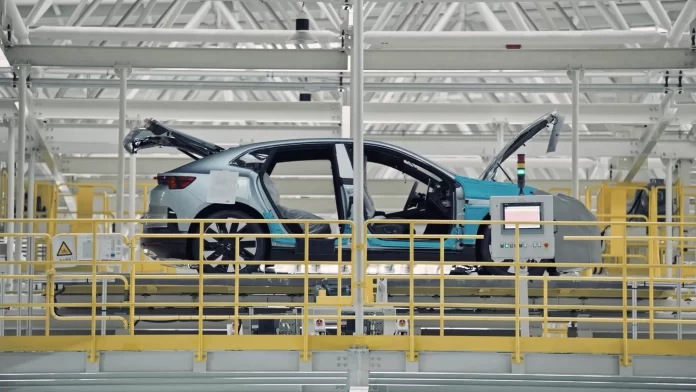
The shift from internal-combustion cars to intelligent electric vehicles (EVs) has upended the auto industry’s traditional profit engines, leaving margins squeezed and many manufacturers operating at a loss. Recent candid remarks from industry figures—FAW Group executive Zhou Shiying saying domestic makers lose “20,000 to 30,000 yuan per car,” and NIO founder Li Bin calling hundreds of millions in model-level waste “normal”—have crystallized a wider problem: the industry’s profit model is breaking under the weight of rapid technological change, intense competition and costly expansion.
Industry data underscore the scale of the transformation. In 2025 China’s auto industry recorded costs of 9.85 trillion yuan against profits of 461 billion yuan—a 4.1% margin and a near-decade low. Losses are particularly acute among so‑called “new‑force” EV makers that pour heavily into electrification and autonomous driving R&D. NIO’s per‑vehicle loss is estimated at about 38,000 yuan despite an average selling price above 250,000 yuan; XPeng reported adjusted per‑vehicle deficits even with lower average prices. Paradoxically, for many challengers, higher sales have meant larger aggregate losses.
Three structural pressures explain the hemorrhaging of profits. First, the new technological logic of EVs—where software, batteries and compute platforms evolve rapidly—has turned cars into electronic products with short relevance windows. Heavy upfront R&D and platform investments must be amortized quickly, but revenues lag as volume ramps slowly. NIO’s multibillion‑yuan annual R&D spending, for example, inflates per‑unit costs until scale is achieved.
Second, the haste to scale creates a “grow to lose” trap. Rapid expansion requires more sales channels, dealer networks, inventory and production capacity. When a model’s popularity peaks within six to nine months—often shorter than the 12–18 months needed to add capacity—manufacturers end up with idle lines and bloated stock. Clearing inventory through aggressive discounts further compresses margins; a failed model can wipe out 500 million to 1 billion yuan, while even successful ones incur 100–200 million yuan in waste from timing mismatches.
Third, the industry’s hopes for high‑margin “software monetization” have not materialized at scale. While overseas examples show subscription revenue with gross margins of 70–80%, Chinese consumers’ preference for buy‑outright features and skepticism about paying for functions that will quickly age has limited acceptance of recurring software fees. With foundational L2 features becoming standard, the remaining high‑value functions struggle to convert into subscribers and sustained revenue.
These forces interact to form a self‑reinforcing loss loop: heavy R&D spurs the need for scale; attempts to scale raise fixed costs and inventory; price competition and unsold stock erode margins; disappointed returns push firms to invest yet more in technology to chase differentiation.
Some automakers are already testing escape routes. Internally, companies are shifting from “full‑stack” self‑development to a precision approach: retaining self‑development for core differentiators—vehicle control logic, driving tuning, brand design—while outsourcing or licensing highly standardized layers such as base operating systems and compute platforms. Li Auto’s 2024 strategy pivot toward targeted self‑development and supplier partnerships is credited with helping it sustain profitability across quarters and deliver consistent revenue growth.
On product strategy, firms are concentrating resources on blockbuster models rather than proliferating marginally differentiated variants. They also aim to exploit OTA updates to extend model life cycles—turning hardware platforms into long‑lived products refreshed through software rather than replaced every 12–18 months. Tesla’s Model 3 is cited as a template: minimal hardware churn but sustained competitiveness through recurring OTA improvements.
At the industry level, collaboration could unlock larger efficiencies. Battery‑cell standardization—reducing the current proliferation of more than a hundred cell specifications to two or three common formats—could eliminate massive duplication, enable scale manufacturing, cut inventory fragmentation and save tens of billions annually across the market. Similarly, shared adoption of mature intelligent‑driving stacks from established suppliers can blunt the costly “reinventing the wheel” arms race.
The transition to intelligent EVs has not killed demand; it has merely redistributed where value must be captured. The winners will likely be those who combine smarter R&D allocation, focused product portfolios, aggressive use of OTA to lengthen model relevance, and industry cooperation to tame component fragmentation. Absent such structural shifts, the industry’s once‑reliable profit engines risk remaining in the repair shop.

