
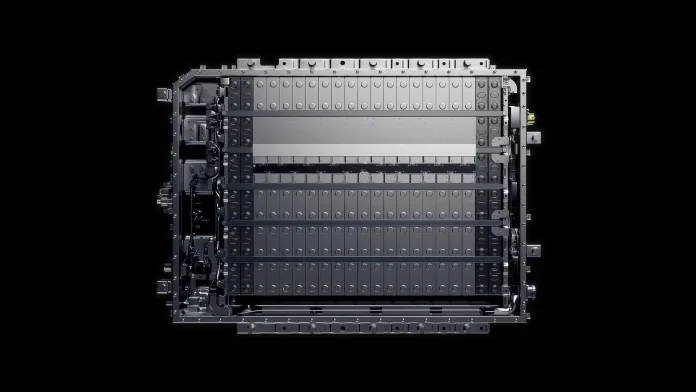
China’s toughest-ever electric-vehicle battery safety regulation—GB 38031-2025—begins enforcing on July 1, 2026, replacing a “time-to-warning” requirement with a stricter “no fire, no explosion” standard. The rule, formally titled “Safety Requirements for Traction Batteries for Electric Vehicles,” tightens the central thermal-runaway requirement that manufacturers must meet, and adds new test conditions designed to better reflect real-world hazards. Yet despite the tougher bar, industry experts say “100% vehicle safety” will remain difficult to guarantee, especially in crash scenarios involving extreme mechanical damage and complex multi-cell failures.
Under the new standard, the core thermal diffusion clause changes from requiring a “five-minute warning signal” before a fire or explosion to requiring “no fire, no explosion,” while still mandating a warning. The regulation also requires that smoke from a thermal runaway event must not enter the passenger cabin. The shift raises the entry barrier for traction-battery makers, pushing them toward safer material systems and better pack-level designs—changes that are likely to be costly and disruptive for smaller players.
The drafting process involved China’s Ministry of Industry and Information Technology (MIIT). The Electric Vehicle Sub-Technical Committee led the revision, with CATL serving as the lead unit. The drafting group reportedly included battery and vehicle players spanning domestic and international firms, among them BYD, Xiaomi, and major automakers, reflecting how central the new requirements have become to China’s rapidly scaling electric-vehicle supply chain. Importantly, the standard includes a phased enforcement approach: newly declared vehicle models must comply immediately, while existing models receive a one-year transition. Enforcement against those products is scheduled to be fully effective from July 1, 2027.
Industry leaders say they have been preparing for this moment for a while. CATL announced early compliance soon after the standard’s March 2025 release, claiming a single-cell safety failure rate of “one in a billion” in testing tied to its Qilin ternary lithium battery. BYD, CALB, Geely, and Harmony Intelligent Mobility Alliance also reported early compliance, suggesting the biggest capacity already appears to have moved past the old requirements.
But the regulation is also expected to reshape the competitive landscape by accelerating consolidation among battery suppliers. Data from the China Automotive Power Battery Industry Innovation Alliance showing that the number of battery companies with real vehicle installations fell sharply: from 72 in 2020 to 52 in 2025, and then to just 37 in the first five months of 2026. The top 10 suppliers now control 93.8% market share, a level that could be framed as a “Matthew Effect” intensifying—faster gains for leading firms and pressure on weaker ones that have lagged in upgrading safety capabilities.
Still, experts caution that passing battery tests does not automatically eliminate all vehicle fires. Over roughly the past year, vehicles from multiple automakers—including Li Auto, Xiaomi, Avatr, and Dongfeng—experienced fire or explosion incidents, even though they reportedly ruled out the traction battery as the cause in those cases. Huawei’s executive director Richard Yu also asserted that no Harmony Intelligent Mobility Alliance vehicle has caught fire due to battery issues, underscoring how results can vary by system integration, usage conditions, and incident causes.
A key reason for the gap between testing and reality is how standards model thermal runaway. The new test environment effectively focuses on a single target cell within a battery pack and induces its thermal runaway, rather than triggering multiple cells simultaneously. While the regulation addresses likely single-point failures—particularly internal short circuits that lead one cell into a chain-reaction sequence—real-world crash conditions can be far more chaotic. High-speed impacts or severe underbody scraping may damage the pack structure, compressing and deforming multiple cells at once, which can then collectively short-circuit and enter thermal runaway. In that world of multi-cell failure, the standard’s controlled test logic may be less representative of the full hazard complexity.
To narrow those gaps, GB 38031-2025 adds new tests, including a bottom-impact requirement and a post-fast-charging safety test. The bottom-impact test calls for the battery pack to withstand an impact equivalent to a 30mm steel ball striking with 150J, with no leakage, no fire, and no explosion. The fast-charging cycle test is aimed at 800V/5C ultra-fast charging technology: the battery must complete 300 fast-charge cycles of aging before an external short-circuit test, again meeting the no-fire, no-explosion requirement.
However, even expanded testing cannot cover all possible real-world variables. Traction batteries contain both oxidizing and reducing components, and protection is about making hazards controllable rather than eliminating them entirely.
For consumers, the standard’s practical effect is stronger safety performance benchmarks, including longer observation windows and stricter constraints on monitoring points and smoke byproducts. The thermal runaway observation duration increases from five minutes to at least two hours, monitoring temperatures must remain within defined limits, and smoke and carbon monoxide thresholds are constrained.
Yet these safety upgrades come with financial trade-offs. Industry experts estimate battery pack cost increases of roughly 10% for LFP packs (about 800 yuan for a 60kWh example) and about 12% for ternary packs (around 1,000 yuan in the same scenario). For premium models, the additional cost may be easier to absorb; for micro-EVs operating on razor-thin per-vehicle margins, the cost pressure is sharper. In parallel, broader industry conditions—including rising input materials and thin overall carmaker profits—make price cuts less sustainable.
Timing is also crucial. While the regulation takes effect July 1, 2026, the one-year transition means that only vehicles newly purchased after July 1, 2027 may be fully compliant. That creates a period of overlap where older and newer standard versions coexist, with inventory clearing and new model launches influencing what buyers actually receive.

