
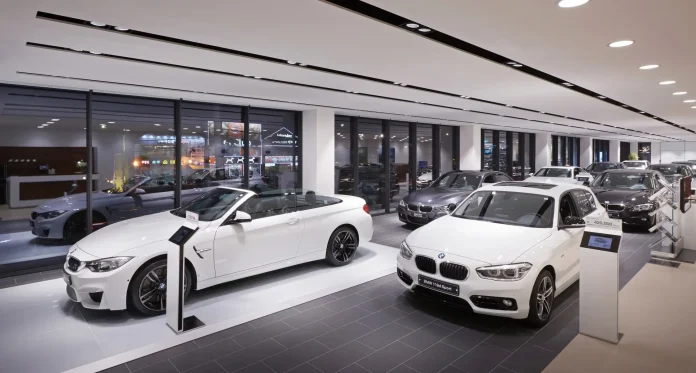
According to a report from SCMP, changing consumer habits stem from deteriorating economic growth prospects, and favorable subsidy policies for mass-market cars weigh on foreign luxury auto brands. Also among the factors is the growing capability of Chinese car companies to produce advanced vehicles at competitive prices.
Sales of high-end foreign luxury cars in China are experiencing a steep decline as demand shifts towards cheaper, domestically produced models. This trend is significantly impacting esteemed European car manufacturers like Porsche, Mercedes-Benz, BMW, and Aston Martin, who have traditionally thrived in the luxury car market.
Shifts in Consumer Preferences
The wavering demand for luxury vehicles stems from several factors. A prolonged downturn in China’s property market has dampened consumer willingness to make substantial purchases. Additionally, affluent buyers are increasingly reluctant to exhibit their wealth, a change influenced by the country’s shifting socio-economic climate, as noted by Paul Gong, the head of China Automotive Industry Research at UBS. This societal change mirrors broader economic challenges, including slowing economic growth, which has led to less-enthusiasm for premium vehicle purchases.
Government Incentives and Market Dynamics
Government incentives such as a substantial trade-in subsidy of 20,000 yuan (approximately US$2,830) aimed at promoting electric and hybrid vehicles are also reshaping the market. These incentives often favor entry-level vehicles, which typically are Chinese-made, encouraging consumers to opt for more affordable options.
Data from S&P Global Ratings reveal a marked decrease in premium car sales. Although premium car sales accounted for about 15% of total sales in 2023, this metric has dropped to 13% in the first nine months of 2025.
Competition from Domestic Brands
Chinese automotive manufacturers, including leading electric vehicle producer BYD, are becoming increasingly competitive. They are innovating rapidly, introducing new electric and hybrid models at lower price points, thereby attracting consumers away from Western luxury brands. Analysts like Claire Yuan from S&P Global indicate that Chinese products not only offer affordability but are also technologically advanced, making them appealing even in the premium segment.
Currently, Chinese brands dominate the passenger car market with a 70% share, while German brands hold merely 12% and Japanese brands about 10%. BYD has surpassed Volkswagen to become the largest car seller in China, becoming the best-selling brand this year in the new energy vehicle category, which comprises electric and hybrid cars.
Declining Sales Figures for Luxury Brands
Several luxury automakers have reported significant declines in sales. For instance, Mercedes-Benz experienced a 27% drop in units sold year-on-year during the third quarter of 2025. BMW’s sales, including its subsidiary brand Mini, also fell by 11.2% in the same period. Additionally, renowned brands like Porsche and Aston Martin are feeling the pinch, attributing weaker demand in China as a critical factor behind their diminishing sales figures.
Ferrari, too, reported a 13% decline in shipments to mainland China, Hong Kong, and Taiwan, becoming the only region witnessing a downturn during the specified timeframe. Mercedes-Benz CEO Ola Källenius has characterized the competition in the luxury car segment as “hyper-competitive,” indicating that these challenges are likely to persist in the foreseeable future.

