
Volkswagen Group China has successfully commenced production of its first vehicle utilizing the China Electronic Architecture (CEA), a pivotal technology leap aimed at rejuvenating its operations in the challenging Chinese market. Following a decline in overall sales of 8% in 2025, with electric vehicle sales plummeting by as much as 44%, the automotive giant has prioritized strategies focused on ‘local for local’ and ‘China Speed.’
In a significant move to expedite innovation and time-to-market, Volkswagen established a partnership with the Chinese electric vehicle maker Xpeng in 2023. This collaboration has been complemented by the opening of the Volkswagen China Technology Center (VCTC) in Hefei, facilitating swift decision-making for project developments aimed specifically at the Chinese consumer base, without requiring extensive coordination with its headquarters in Wolfsburg.
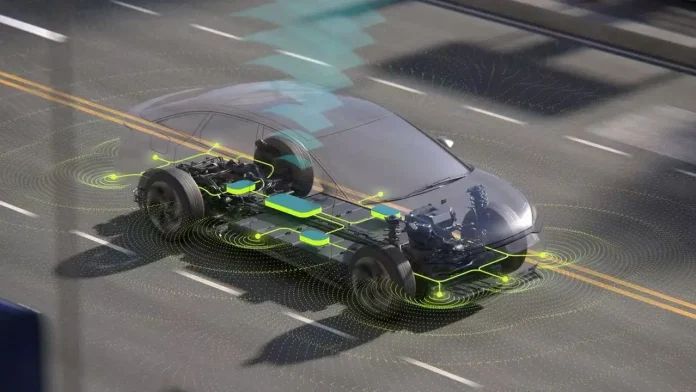
The production of the VW ID. UNYX 07 marks the launch of the CEA, Volkswagen’s first zonal electronic architecture, which represents the company’s commitment to developing Intelligent Connected Vehicles (ICVs) tailored for the local market. This new architecture enables high-performance computing and is fully capable of over-the-air updates, allowing quick adaptations across various vehicle platforms and powertrain types.
According to Oliver Blume, CEO of Volkswagen Group, “The start of production of our first zonal electronic architecture marks another milestone in our ‘In China, for China’ Strategy.” He highlighted the achievement of transitioning from concept to mass production in just 18 months, claiming it is the fastest timeline the Group has ever managed for an entirely new electronic architecture while maintaining rigorous safety and quality standards.
The CEA allows Volkswagen to streamline its vehicle development processes, with overall development cycles shortened by up to 30% and costs reduced by up to 50% for key projects. It has also noticeably decreased the complexity of electronic control systems by 30%, thereby enhancing the capabilities of advanced AI functions and China-specific driver assistance systems.
Ralf Brandstätter, a member of Volkswagen AG’s Board of Management and CEO of Volkswagen Group China, underscored the significance of the CEA by stating, “We have now blazed the trail for a new generation of Intelligent Connected Vehicles in China,” emphasizing the architecture’s ability to integrate software-driven innovations efficiently across various vehicle types.
Beginning this year, Volkswagen plans to expand its CEA-based models to include a broader range of vehicles, thereby catering to the diverse needs of consumers in the increasingly competitive Chinese automotive market.

