
Chinese automakers embrace rear-wheel steering as vehicles grow larger, despite mixed consumer reactions to the technology
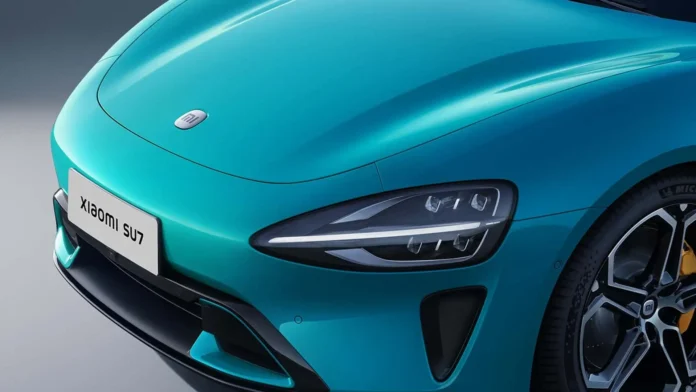
The anticipated launch of Xiaomi’s SU7L has reignited debate over rear-wheel steering, a technology that has rapidly shifted from a luxury-car exclusive to a mainstream selling point across China’s booming electric vehicle market. As automakers compete in an escalating “size arms race,” industry observers predict rear-wheel steering will become nearly universal in the coming years.
Rear-wheel steering allows a vehicle’s back wheels to turn in tandem with the front wheels, dramatically reducing turning radius and improving maneuverability. The BYD Tang EV offers ±7° rear-wheel steering as standard, achieving a minimum turning radius of just 5.2 meters. Even luxury brands like Mercedes-Benz have capitalized on the feature, previously charging customers an annual fee of nearly 5,000 yuan to activate it.
A Technology in Transition
The shift from luxury feature to mass-market offering has polarized public opinion. Before China’s automotive industry surged, rear-wheel steering remained exclusive to high-end luxury vehicles like the Cadillac CT6. The technology’s recent proliferation through mainstream models—such as the Arcfox Alpha T9 and IM LS6, priced around 200,000 yuan—has exposed it to broader consumer scrutiny.
Critics point to several drawbacks. Drivers report that vehicles with rear-wheel steering handle differently during everyday maneuvers, particularly when reversing, requiring more caution and effort. Some passengers experience motion sickness during aggressive driving due to lateral forces applied to the rear of the vehicle. Additionally, the technology increases manufacturing costs by several thousand to over ten thousand yuan per vehicle, and accelerates rear tire wear due to lateral slipping.
Supporters counter that these concerns are largely solvable through familiarity and proper calibration. Modern vehicles equipped with 360° surround-view cameras and transparent chassis displays allow drivers to monitor their vehicle’s trajectory in real time. A well-tuned rear-wheel steering system can actually enhance stability and reduce vibration, and the trajectory adjustment is primarily a matter of habit adaptation.
An Inevitable Solution to China’s “Large Vehicle” Trend
The real catalyst for rear-wheel steering’s popularity lies in Chinese consumers’ insatiable appetite for spacious vehicles. Models like the Qin MAX, Geely Galaxy Starlight 6, and Arcfox Beta S3 have pushed B-segment vehicles below 100,000 yuan, while D-segment SUVs have sunk below 200,000 yuan. The 100,000 to 200,000 yuan price range represents China’s largest vehicle sales segment, dominated by increasingly spacious models.
However, size creates practical challenges. On narrow roads and in compact parking spaces, large vehicles without rear-wheel steering require multiple attempts to complete U-turns—a situation that poses genuine safety risks. On China’s typical two-lane roads with lane widths between 2.3 and 3.75 meters, vehicles exceeding 5.2 meters in length struggle to execute single-pass U-turns without the technology.
The performance gap is substantial. Models without rear-wheel steering, such as the Xiaomi Pengcheng N90 Max, achieve turning radii around 5.95 meters. Those equipped with the technology—like the AITO M9 and Li Auto L9—deliver turning radii of 5.1 to 5.3 meters. The Denza N8L, featuring ±10° rear-wheel steering, impressively reaches 4.58 meters.
Li Auto’s evolution illustrates the technology’s inevitability. In 2024, the company’s MEGA MPV notably excluded rear-wheel steering, citing concerns about third-row passenger comfort and power distribution. By 2026, the refreshed MEGA embraced the technology, reducing its turning radius from 6.2 to 5.5 meters.
Industry analysts view rear-wheel steering not merely as a luxury enhancement but as a necessary solution to the consequences of China’s vehicle size escalation. While consumers have gained spacious interiors, they must accept the trade-off of reduced maneuverability—unless they adopt rear-wheel steering. As production scales increase and technology matures, cost barriers will diminish, making widespread adoption across price segments increasingly likely.

