
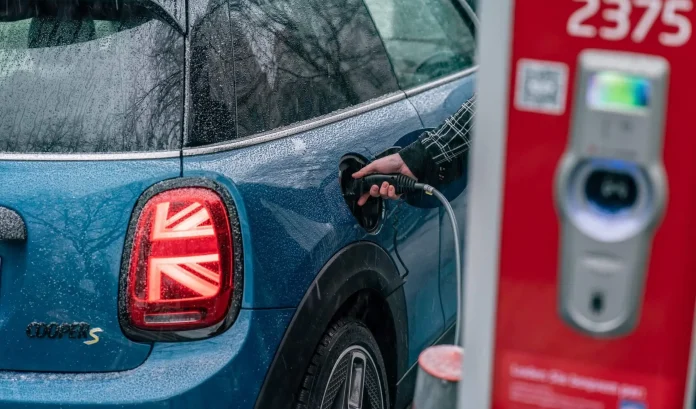
The UK government has confirmed that a new mileage-based tax on electric vehicles will start in April 2028, aiming to replace declining fuel-duty receipts as more motorists switch away from petrol and diesel.
The scheme, known as electric Vehicle Excise Duty (eVED), will be charged in addition to standard Vehicle Excise Duty (VED). Battery-electric car drivers will pay 3 pence per mile, while plug-in hybrid drivers will pay 1.5 pence per mile. Electric vans will be exempt from the charge.
The government says the tax is intended to ensure motorists contribute to road funding based on how much they use the road, mirroring fuel duty, which is collected when vehicles burn fuel. It also argues EV drivers will continue to receive favourable tax treatment compared with petrol and diesel users, alongside broader support for zero-emission vehicles.
Under the revised plan, private motorists will not face extra mileage verification checks for cars and plug-in hybrids under three years old, a requirement that had been proposed earlier. Instead, drivers will submit an odometer reading and an estimate of their annual mileage when renewing VED. The Driver and Vehicle Licensing Agency (DVLA) will calculate a provisional eVED charge using that information, which will later be reconciled against official records.
Drivers who choose to opt in to a voluntary connected-car option will also be able to submit mileage information directly from the vehicle’s systems, rather than providing it manually.
The government has also made changes aimed at fleets, rental firms and leasing companies. Rather than requiring individual mileage submissions, fleet operators will be able to submit estimated mileage centrally. In addition, companies raised concerns that unresolved eVED liabilities at the end of a lease could affect vehicle residual values. The government responded by allowing operators to settle any outstanding eVED through a top-up payment before the vehicle is sold.
Industry reaction has been mixed. The British Vehicle Rental and Leasing Association (BVRLA) said the simplifications are welcome but continued to oppose the tax itself, arguing the policy’s timing is problematic. BVRLA chief executive Toby Poston said the government has “taken some of the roughest edges” off its plans, but warned that making ownership more expensive is unlikely to smooth the transition to electric vehicles.
Another industry body, EVA England, said the scheme remains too complex and risks leaving some drivers out of pocket. Its chief executive, Vicky Edmonds, said the government’s change for newer vehicles was positive but argued the wider approach does not give drivers enough confidence.
One design choice has attracted particular criticism: because eVED is not tied to where miles are driven, drivers will pay for mileage travelled abroad as well as in the UK. While officials estimate that only about 2% of UK cars’ annual mileage is overseas, critics have argued the approach effectively requires more sensitive data to avoid charging for international travel, raising concerns about using location information in the first place.
The government expects eVED to raise £1.1 billion in 2028–29, increasing to £1.9 billion by 2030–31. It estimates the charge will be paid by around six million EV drivers by the time it begins, with a typical battery-electric driver paying about £240 per year—still below what fuel duty costs many petrol drivers, which is estimated at roughly £480 to £600 annually.
Most of the projected revenue—about 80%—is earmarked to support wider electrification initiatives, including grants of up to £3,750 toward qualifying EV purchases, along with investment in charging infrastructure and other zero-emission programmes. The government said support measures totaling about £7.5 billion are planned over the next decade.
The impact is expected to vary across the country. Analysis referenced by the leasing sector suggests the flat per-mile rate would hit rural drivers hardest, with south-west England motorists facing higher average additional charges than those in London. A separate link was also made to fewer EV sales over time, raising questions about whether the tax could slow uptake in regions where consumers may find EV adoption more difficult.
Overall, while the government has trimmed parts of the original compliance approach after consultation, critics say the policy may end up reproducing the geographic unfairness already seen in UK charging infrastructure—this time through the tax system itself.

