
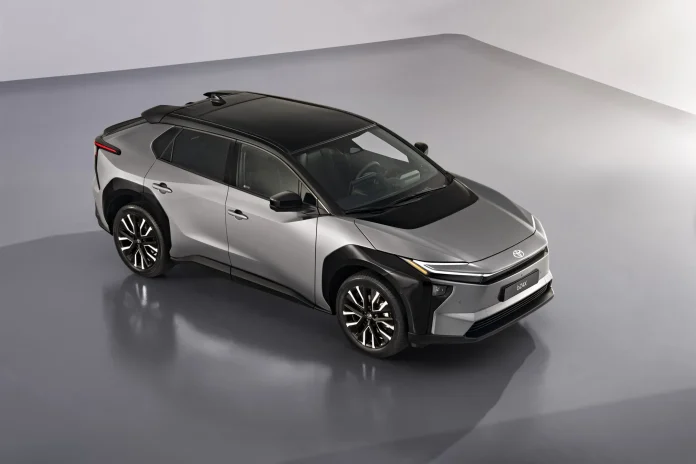
Despite a challenging global landscape marked by trade tensions and a seismic shift towards electrification, Toyota Motor Corporation has once again demonstrated its resilience, closing 2025 as the world’s top-selling automaker for the sixth consecutive year. While its performance in the Chinese market remains a mixed bag, the company’s strategic focus on hybrids and the landmark decision to localize Lexus production in Shanghai signal a determined, albeit cautious, approach to its electric future.
Global Dominance Fueled by Hybrids and Core Markets
On January 29, 2026, Toyota reported record-breaking global sales of 11.3225 million vehicles for the full year 2025, a 4.6% increase year-on-year. This sustained success is not driven by a rapid shift to battery electric vehicles (BEVs), but rather by the enduring strength of its traditional portfolio and the soaring popularity of its hybrid electric vehicles (HEVs).
Internal combustion engine vehicles remain the bedrock of Toyota’s sales, accounting for approximately 6.35 million units, or 56% of the total. However, the real growth engine is its electrified lineup (including HEVs, PHEVs, BEVs, and FCEVs), which reached a cumulative 4.9949 million sales, making up 44% of the total. Crucially, HEVs dominate this category, with 4.4335 million sold globally in 2025—an 7% increase and a testament to the sustained global demand for Toyota’s pioneering hybrid technology, led by models like the Prius.
Geographically, the North American market was a powerhouse. Toyota sold 2.9297 million vehicles in the region, a 7.31% jump, with US sales alone surpassing 2.5 million for the first time. This performance was bolstered by the resolution of previous production halts and the sustained appeal of its hybrid lineup. Furthermore, Toyota’s extensive global production network helped mitigate the potential impact of import tariff threats from the Trump administration. The Japanese domestic market also saw a strong rebound, with sales soaring 11.9% to 2.0713 million, recovering from the production disruptions and reputational damage caused by the 2024 certification scandal.
A Tale of Two Strategies in China: Stabilization vs. Electrification Lag
In stark contrast to its global triumph, Toyota’s performance in China tells a more nuanced story. While it sold 1.7804 million vehicles in 2025—a marginal 0.2% increase year-on-year—it was the only one of Japan’s “Big Three” automakers to achieve growth. Honda and Nissan continued their steep declines, with sales falling 24.28% and 6.26%, respectively. Toyota’s ability to hold the line, even slightly, is attributed to a pragmatic “multi-pathway” approach that prioritizes stability over a rushed pivot to pure EVs.
Traditional fuel models like the Corolla, Camry, and RAV4 still account for over 70% of its China sales, supported by strategic price adjustments. Simultaneously, the company has aggressively pushed its hybrid models. Within China, FAW Toyota sold 380,100 intelligent hybrid vehicles (up 14%), and the hybrid version of the Camry saw a 62% sales surge. This strategy has allowed Toyota to maintain a foothold even as local competitors surge.
However, the company’s Achilles’ heel is glaringly apparent in the pure electric segment. In 2025, despite a 42.4% year-on-year increase, Toyota’s global BEV sales were a mere 199,100—less than 2% of its total volume. In China, the world’s largest EV market, the contrast is stark. While FAW Toyota’s bZ3 and bZ5 models retailed around 35,000 units and GAC Toyota’s C-HR EV sold 70,000, this pales in comparison to domestic giant BYD, which sold over 2.25 million pure electric vehicles in the same period. This massive gap underscores Toyota’s status as a follower, not a leader, in the BEV space, leaving its long-term position in China vulnerable.
Localization of Lexus
Recognizing the urgent need to accelerate its BEV ambitions, Toyota has placed its bets on its premium brand, Lexus. After years of speculation, 2025 finally saw the official confirmation and establishment of Lexus (Shanghai) New Energy Co., Ltd. This wholly-owned subsidiary, based in Jinshan District, represents a ¥107.1 billion ($5 billion) investment and will have an annual production capacity of 100,000 units. The first all-electric Lexus model is expected to roll off the production line as early as 2027.
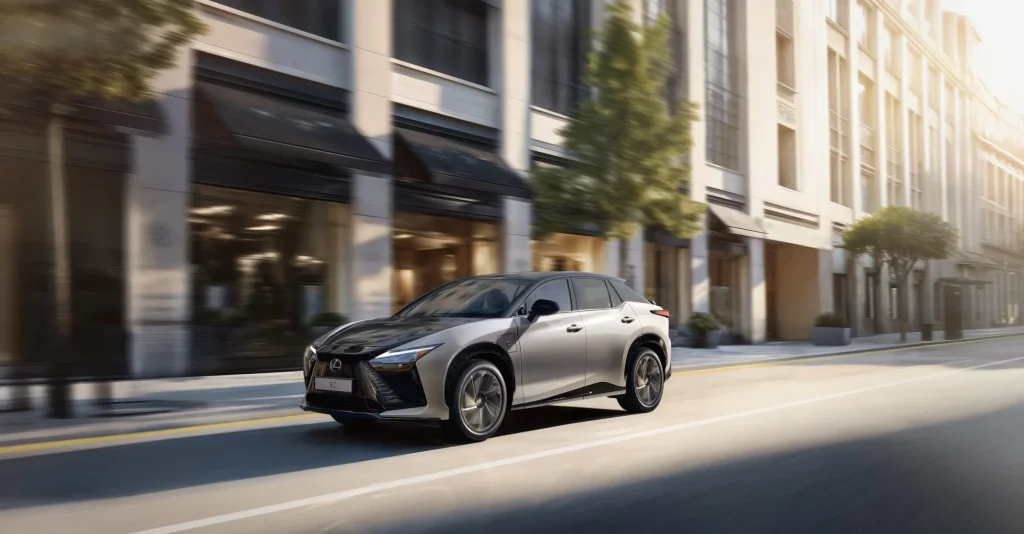
This strategic move makes Lexus the second foreign automaker, after Tesla, to establish a wholly-owned EV factory in China. It marks a significant departure from Lexus’s long-held identity as a pure-import brand. For years, Lexus thrived on its “Made in Japan” cachet, but since 2022, its sales have been squeezed by agile local EV startups. In 2025, Lexus managed to sell 183,800 vehicles in China, remaining the only imported luxury brand with positive growth. However, this was achieved largely through significant price discounts, and its electrified model mix globally was only around 3% in 2024, lagging far behind competitors like Mercedes-Benz and BMW.
By localizing production, Toyota aims to replicate Tesla’s success by reducing costs, bypassing import tariffs, and, most importantly, accelerating development and supply chain integration to make its luxury EVs competitive in China’s cut-throat market. President Koji Sato has positioned Lexus as the vanguard of Toyota’s electrification strategy, and the Shanghai factory is its most tangible and ambitious step yet.
Toyota’s 2025 performance showcases a company leveraging its historic strengths—reliability, hybrid leadership, and global scale—to navigate a turbulent period. It remains an unassailable giant in terms of volume. However, its reliance on a gradual transition is a high-stakes gamble. The Chinese market, with its brutal pace of electrification, serves as both a warning and a proving ground. The success of the localized Lexus EV project will be the critical variable that determines whether Toyota can truly transform from a resilient hybrid leader into a formidable force in the all-electric future.

