
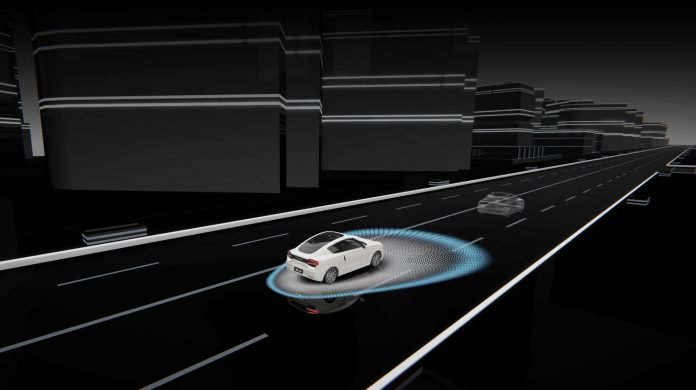
The autonomous driving industry is undergoing a fundamental transformation, driven by a new wave of artificial intelligence technologies. The emergence of end-to-end and Vision-Language-Action (VLA) models is catalyzing a paradigm shift from rule-based, modular systems to holistic, data-driven intelligence. This technological revolution is not just improving performance; it is actively dismantling traditional market barriers and reshuffling the competitive landscape.
For years, the industry was dominated by a “rule-driven” approach, reliant on vast teams of engineers manually coding for countless driving scenarios. This model heavily favored incumbents with massive resources and data scale, creating a high barrier to entry. The new AI paradigm changes the game. By leveraging deep learning to directly map sensor input to driving decisions, end-to-end models significantly reduce dependence on hand-crafted rules. This shift lowers the entry threshold, allowing technologically agile companies to compete with core algorithmic breakthroughs rather than sheer manpower.
A prime example of this disruption is the rapid rise of DeepRoute.ai. Once a relative newcomer, it has used these advanced AI frameworks to catapult itself into the top tier of China’s urban Navigation on Autopilot (NOA) market. By October 2025, DeepRoute.ai claimed 38% of the third-party urban NOA market share, momentarily leading established giants like Huawei and Momenta. Its growth multiple reached 2.7x, demonstrating the explosive potential unlocked by the new technological approach. This success is underpinned by strategic partnerships with major automakers like Geely and Great Wall, enabling the large-scale deployment necessary to fuel the AI’s learning cycle.
The competitive dynamics are now defined by the race to build and scale a “data closed-loop.” In an end-to-end world, the quantity and quality of real-world driving data become the ultimate moat. As DeepRoute.ai’s founder Zhou Guang stated, reaching one million vehicle installations is considered a “safe zone.” This scale generates billions of kilometers of daily road data, creating a virtuous cycle: more data leads to better, more generalized AI models, which in turn attract more OEM partners and generate even more data. Companies that cross this threshold gain insurmountable advantages in algorithm iteration and solving complex, long-tail driving scenarios.
The industry’s battleground has also clearly shifted from highway NOA to the far more complex urban NOA environment, which is entering a phase of rapid commercialization. In 2025, penetration of L2+ assisted driving functions in China reached 64%, with urban NOA swiftly moving into the mainstream 100,000-200,000 RMB vehicle segment. This democratization is being powered by third-party AI solution providers like DeepRoute.ai, Momenta, and Huawei, whose “Chinese solutions” are now attracting global brands like Mercedes-Benz and Toyota.
Looking forward, the competitive landscape is crystallizing around distinct paths. New automakers like Tesla and Li Auto pursue full-stack in-house development to build proprietary walls. Traditional OEMs largely partner with external AI specialists for speed. Among these suppliers, strategies diverge: while some seek broad brand partnerships, players like DeepRoute.ai focus on deep collaboration with core automakers to create “blockbuster models” that guarantee volume and the invaluable data flow it brings.
In conclusion, end-to-end and VLA models are more than just technological upgrades; they are the new competitive logic of the self-driving market. They have democratized innovation, making algorithmic excellence as critical as manufacturing scale. The winners in this new era will not be those who simply possess the technology, but those who can most efficiently translate algorithmic breakthroughs into large-scale, reliable commercial deployment, thereby mastering the self-reinforcing cycle of product experience, mass production, and continuous data-driven evolution. The race is no longer just about having the smartest AI in the lab, but about building the most formidable AI learning engine on the road.

