
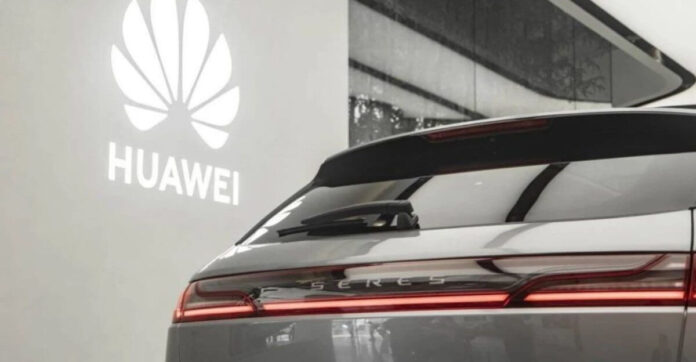
Huawei, long known for telecoms and smartphones, has in recent years built an automotive business that touches nearly every non-manufacturing link in the vehicle value chain: product planning, design, vehicle software and electronics, autonomous-driving stacks, sales and quality control. Its Harmony Intelligent Mobility Alliance (HIMA) booth displayed more than 15 vehicles from partner brands — including AITO and LUXEED — and executives touted robust monthly sales for certain models and a 32% year‑on‑year jump in Harmony group volumes to 580,000 units in 2025.
Industry analysts and executives describe Huawei as a new kind of supplier — a “Tier 0.5” — whose scope sits above traditional Tier‑1 parts companies but short of full OEM vehicle manufacturing.
Huawei’s ascent was not inevitable, but geopolitics helped accelerate it. U.S. export controls since the mid‑2010s, tightened in 2019 to restrict advanced semiconductors and other supplies, constrained some of Huawei’s device businesses. Executives acknowledge that preexisting semiconductor inventories and a strategic pivot into automotive applications allowed Huawei to double down on vehicle electronics, software and integration services. In fiscal 2025, sales of Huawei’s automotive components and software grew 72% year‑on‑year to 45 billion yuan, reflecting heavy investment and expanding commercial traction.
The company’s model — retaining design, software and sales while contracting manufacturing to partners such as BAIC — has created alternatives for state‑owned and mid‑tier automakers facing intense competition from market leaders like BYD. Seres Group’s experience illustrates the dynamic: since partnering on the AITO brand under the Harmony banner, Seres swung from a 2022 loss to a profitable 2025 as volumes and margins recovered, with AITO accounting for the majority of sales.
But Huawei’s emergence also highlights a structural tension in China’s automotive market. The sector long suffered brand clustering and oversupply. Huawei’s behind‑the‑scenes role functions as a “life‑sustaining device” for many smaller brands — helping them get to market quickly — while simultaneously concentrating platform-level influence in a single technology player. Competitors praise Huawei’s R&D muscle — the company deploys roughly 20% of sales into research — but worry about losing proximity to automaker customers and control over product differentiation.
Huawei is not unopposed. A new generation of specialized firms is pushing into the software and semiconductor layers Huawei targets. Beijing Momenta, an autonomous‑driving software provider, has accelerated partnerships with automakers both inside China and in markets such as the UK. Horizon Robotics, focused on SoCs for AD applications, has expanded collaborations with European component makers and claims a rising market share behind established players like Mobileye. Such rivals are pursuing global expansion in part to offset limitations created by U.S. policy that inhibits some Chinese suppliers’ access to Western markets.
The broader market evolution underlines why the Tier 0.5 concept is gaining traction. As vehicles become software‑defined, OEMs seek integrated platforms, centralized computing and turnkey systems that cut development time and complexity. Tier 0.5 players — delivering modular platforms, connectivity, embedded software and systems integration — are positioned to fill that gap, especially in Asia‑Pacific and Europe where EV adoption and intelligent‑mobility investment are strongest.
Whether Huawei’s model will lead to a healthier, consolidated industry or to new dependencies that stifle competition remains an open question. For policymakers and legacy suppliers from Japan to Europe, the practical challenge is how to coexist with a China‑based, vertically integrated technology partner that now exerts outsized influence over the next generation of vehicles.

