
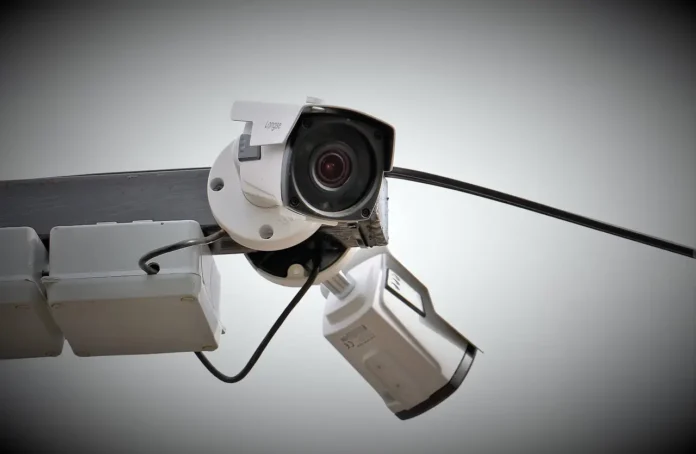
A cybersecurity researcher at the Def Con hacking conference in Las Vegas demonstrated an AI-generated visual pattern designed to prevent surveillance software from identifying a vehicle, despite still recording the scene.
Bill Swearingen, creator of the “noRecognition” project and founder of SIXCYBER, said he tested the approach by wrapping a 2009 Toyota Yaris—specifically a Toyota Yaris used in a public demonstration—so that a Flock surveillance camera’s detection systems would not flag the car. The researcher described the method as “scrambling” the software’s ability to recognize objects, rather than physically blocking the camera’s view.
According to the demonstration details, the pattern does not stop footage from being captured. Instead, it targets the computer-vision layer that typically processes video to identify objects and read information such as license plates. In the test, the car appeared in the video, but automated detection software failed to classify it correctly, effectively removing it from algorithmic searches used to locate people or vehicles.
Swearingen developed the system over roughly a year from a home lab in Kansas City, describing approximately 31 million tests as part of the project’s training process. He said the approach uses reinforcement learning, where the system generates patterns, checks whether detection software still recognizes what is covered, and then improves the pattern based on those results. Swearingen characterized the process as “teaching the model how to paint,” with the model iterating rapidly to produce new patterns.
He reported that the patterns defeated 11 open-source detection algorithms during his testing, including software associated with Flock Safety, Axon, and Clearview AI. The technique is commonly discussed as a form of adversarial machine learning—taking advantage of differences between how computer vision systems and humans interpret images.
Swearingen said the motivation includes concerns about the increasing density of surveillance cameras in his hometown and the potential for automated tracking to affect people attending events and protests. He framed the project as a way for individuals to opt out of being identified through automated systems.
While the immediate application is demonstrated in vehicle wrapping, Swearingen indicated the project is moving toward consumer availability. A crowdfunding effort is reportedly underway to support sales of merchandise bearing the patterns, with initial items such as T-shirts and hoodies. He also suggested vehicle skins could follow later, aiming for designs that remain effective at distance while staying practical to wear or apply.
For now, Swearingen plans to keep his most effective pattern designs private. He said doing so could slow efforts to build countermeasures, adding that each failure against detection tools helps improve future pattern generations. The demonstration arrives amid broader debate over surveillance technology, particularly around accuracy, error rates, and the consequences of false or missed matches when algorithms scan large volumes of video.

