
Hyundai Mobis, a leading global auto parts supplier, has announced a new technology aimed at improving the performance and safety of electric vehicles (EVs). The company has developed an advanced cooling device, the Pulsating Heat Pipe (PHP), designed to prevent overheating in EV batteries during ultra-fast charging. This innovative technology, which could significantly reduce charging times and improve the lifespan of EV batteries, is set to become a key component in the future of electric mobility.
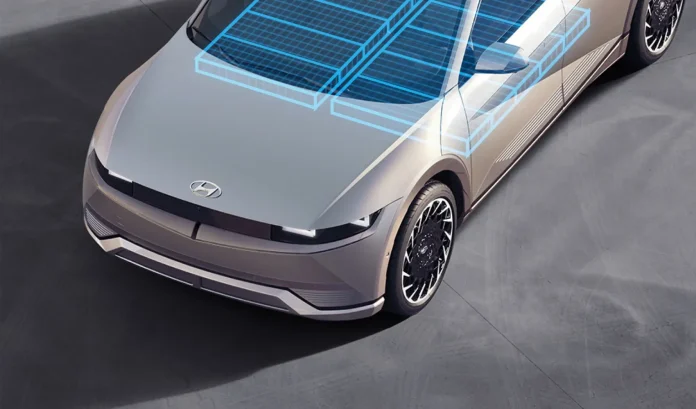
The PHP is a heat conductor composed of an aluminum alloy and refrigerant, specifically engineered to dissipate the intense heat generated by EV batteries during rapid charging. Positioned between battery cells, the PHP efficiently transfers heat from the battery, ensuring that temperatures remain stable even under the stress of high-speed charging.
The technology works by using the pulsation of the refrigerant inside the metal tube, which facilitates a uniform distribution of heat throughout the system. This process allows the PHP to maintain a heat transfer performance more than ten times higher than that of standard aluminum cooling plates. Unlike conventional heat pipes, the PHP’s performance remains unaffected by gravity, making it highly effective even in high-speed vehicles.
Hyundai Mobis’ successful development of the PHP is particularly significant in the context of ultra-fast charging, a key challenge for the EV industry. As EVs are charged faster, battery cells can heat up rapidly, posing a risk to performance and safety. By integrating the PHP into the battery modules, Hyundai Mobis has created a solution that allows heat to be efficiently transferred from the cells to the exterior, maintaining the battery’s optimal temperature during high-charge conditions.
The breakthrough technology is not only efficient but also cost-effective. By using a press method during manufacturing, Hyundai Mobis has simplified the production process and reduced costs, with the PHP’s thickness reduced to just 0.8 mm. This is a significant improvement over traditional heat pipes, which can be as thick as 6 mm, making the PHP more adaptable for use in the compact and complex structures of vehicle batteries.
“This device will contribute to reducing EV charging time by establishing a stable thermal management system, a critical factor for future EV performance,” said a Hyundai Mobis spokesperson. “Ensuring battery safety while reducing charging time is essential for overcoming the challenges of electric mobility, and we are excited to bring this technology to the market.”
The PHP cooling system is expected to be a key feature in high-end EV models, with Hyundai Mobis actively pursuing partnerships with global automakers for its commercialization. While the exact timeline for mass production has yet to be finalized, the company is optimistic about the potential of this technology to reshape the EV market and further enhance the driving experience.
Hyundai Mobis has also announced that it is the first company to apply this pulsating heat pipe technology to vehicle battery cooling, marking a major milestone in thermal management for electric vehicles. With this breakthrough, the company is poised to play a central role in the next generation of electric vehicle innovations.

