
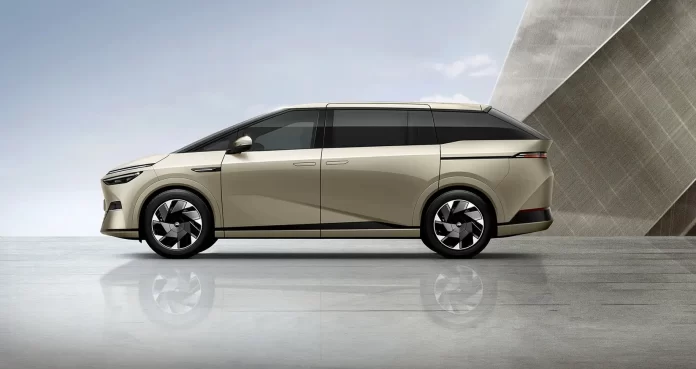
A severe heatwave battering Chongqing has triggered a wave of air suspension failures in XPeng’s flagship X9 MPV, according to multiple owner reports and customer communications. The malfunctions, which reportedly occur after vehicles are parked underground and then driven onto roads in extreme temperatures, have raised new questions about vehicle durability and safety—especially after the company offered an extended warranty intended to reduce owners’ risk of costly repairs.
XPeng said it issued an apology on July 15 and introduced a special warranty extension for the X9’s front air spring system. The coverage, the company announced, would extend to 8 years or 160,000 kilometers and would remain valid even when the vehicle changes owners.
Owners describe sudden and dramatic changes in ride height. Several accounts say the vehicles began flashing an air suspension fault warning soon after exiting underground parking garages, sometimes accompanied by a hissing sound, before the car rapidly sagged to one side or collapsed fully. In one case described by a driver in Yubei District, the vehicle allegedly tilted severely shortly after driving on an expressway in 39°C heat, forcing an emergency stop and a tow.
XPeng’s customer service initially attributed the issue to the air suspension compressor entering thermal protection in hot weather. Representatives reportedly advised owners to stop and wait for the system to cool down, noting that the X9’s air suspension includes an intelligent adaptive function that adjusts ride height while driving. In the company’s explanation, frequent suspension adjustments in high temperatures can raise compressor temperatures until thermal protection is triggered, at which point the system may be unable to maintain air pressure, allowing the vehicle body to sink.
Owners and observers have criticized the explanation as reactive rather than preventive. While the compressor-heat narrative suggests an engineering vulnerability that becomes more likely during extreme ambient conditions, the warranty offer has not quelched broader safety concerns about what the underlying failure means for highway driving. The extended warranty, moreover, appears limited to the “front air spring system,” leaving open questions about whether rear suspension components could face similar risks under the same thermal conditions.
Technical analysis included in the discussion points to design differences in air suspension architectures. The X9 is described as using an “open-loop” air supply approach, in which outside air is drawn in, compressed, stored, and then vented to the atmosphere when ride height changes. In hot weather, that process can combine ambient heat with compression heat, increasing the likelihood that the compressor overheats. Frequent ride-height changes driven by predictive and adaptive chassis behavior could further reduce cooling intervals, creating little margin under sustained heat.
By contrast, some closed-loop systems—referenced in comparisons—are described as circulating air primarily within a sealed loop, reducing how often the compressor must draw in and compress outside air. Supporters of the closed-loop model argue it can improve thermal management under extreme temperatures.
The X9 episode is also being viewed in the context of other reported quality and safety issues involving XPeng models. A recall announced by Chinese market regulators in September 2025 covered 47,490 XPeng P7+ vehicles due to steering assist motor sensor wiring harness contact problems. The X9 controversy comes amid a broader pattern of owner complaints spanning multiple systems, from electronics and intelligent-driving functions to braking-related and other hardware issues, according to the accounts described. Some owners have also alleged that fixes did not fully resolve recurring problems.
In addition to the vehicle-level concerns, the controversy is fueling debate over XPeng’s business strategy. The company has pursued aggressive cost reduction and supply-chain localization, including shifts in key suspension-related sourcing. At the same time, market observers argue that lowering costs can be risky if extreme-condition testing and component specifications are not preserved at the required safety margins.

