
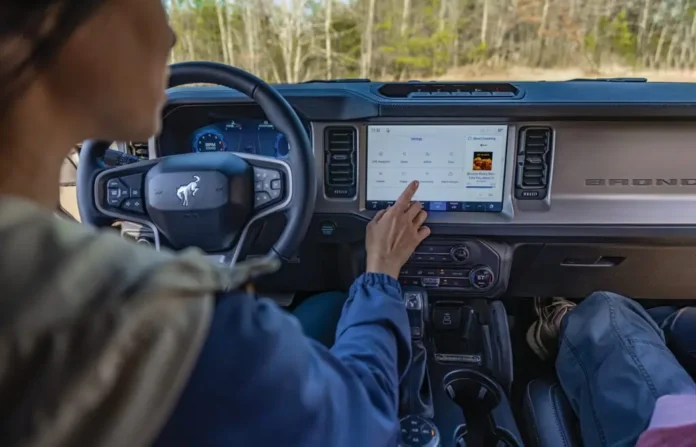
Automaker launches privacy website as GM settlement and regulatory pressure mount on data practices
Ford Motor Company has issued a public “privacy promise” vowing never to sell customer driving data to third-party data brokers, backed by a new website detailing what information the company collects and how vehicle owners can adjust data-sharing settings.
The pledge, unveiled Monday, comes as connected vehicles face intensifying legal and regulatory scrutiny. General Motors agreed last week to pay $220 million to settle claims brought by 36 states that it improperly sold driver and location information to data brokers, and independent privacy reviews have ranked modern connected cars as the worst product category for consumer privacy protection.
“I personally think that it’s super important for us to be making it very clear to our customers what our data practices are, and not only that, but making a commitment to them about it,” said Kristin Jones, Ford’s chief privacy officer, who joined the company in 2024 after two decades working on privacy issues in the legal, financial and healthcare sectors.
Ford’s commitment focuses on three core principles: building privacy protections into products from initial data collection through disposal, explaining data use in plain language, and giving customers granular control over what information they share. The company says it will employ anonymization and aggregation techniques to protect personal details while continuing to use vehicle data to improve safety and reliability.
The automaker’s own research indicates consumer demand for such protections. A survey of more than 1,000 U.S. customers, including owners of rival brands, found that 91% described data privacy as a key consideration in their purchasing decisions. Forty-one percent expressed extreme or very high concern about privacy practices in the automotive industry, though only 14% said they fully understand what data their vehicles actually collect.
Ford’s announcement arrives at a critical juncture for the industry. The GM settlement requires the company to narrow the driving data it collects and to obtain express consent from drivers before gathering information. The Federal Trade Commission had already raised similar concerns about GM’s practices, signaling broader regulatory interest in automaker data handling.
Independent privacy assessments have documented widespread industry concerns. A review of 21 vehicle brands found that each transmitted data to at least one outside domain over Wi-Fi, with more than half contacting domains tied to advertising, tracking, or analytics platforms. Mozilla, the nonprofit organization behind the Firefox browser, ranked modern connected cars as the worst product category for privacy it has evaluated, finding that 92% of automakers reviewed gave drivers little or no control over personal data and that 84% shared user information with outside parties.
“We’re not in it to try and monetize data in some way,” Jones said. “We’re trying to offer products and services that customers derive value from.”
However, Ford’s pledge comes with practical limitations. Data-sharing controls depend on which features a vehicle owner chooses to enable. Customers who opt out of vehicle tracking or location sharing may lose access to built-in navigation, remote start, roadside assistance, and over-the-air software updates.
The distinction between a public promise and legally binding contract also matters. While Ford‘s pledge exposes the company to potential enforcement action by the Federal Trade Commission or state attorneys general if practices diverge from the public commitment, the promise itself is not a legal contract. The operative terms remain in Ford’s official privacy policy and connected-vehicle agreements, which include customary exceptions for law enforcement requests and work with outside service providers.
Ford is preparing to launch a new generation of heavily connected vehicles built on a universal electric vehicle platform, raising the stakes of establishing customer trust around data practices. Rival EV startup Slate Auto, backed by Jeff Bezos, has similarly emphasized data stewardship as a competitive advantage ahead of its market entry.
For the broader industry, Ford’s move establishes a new standard for privacy disclosure just as regulatory and consumer pressure intensifies.

