
China’s auto market in the first half of 2026 has shifted sharply, with demand at home contracting while overseas sales surged, reshaping the competitive landscape for manufacturers and tightening pressure on weaker players.
Domestic passenger vehicle retail sales fell 20.2% year-on-year in the first half to 8.701 million units, according to industry figures compiled by the China Passenger Car Association. Related data from the China Association of Automobile Manufacturers showed total domestic sales of 9.921 million vehicles, down 21.1% over the same period. The shortfall was largely covered by exports, which grew quickly as automakers sought relief outside China.
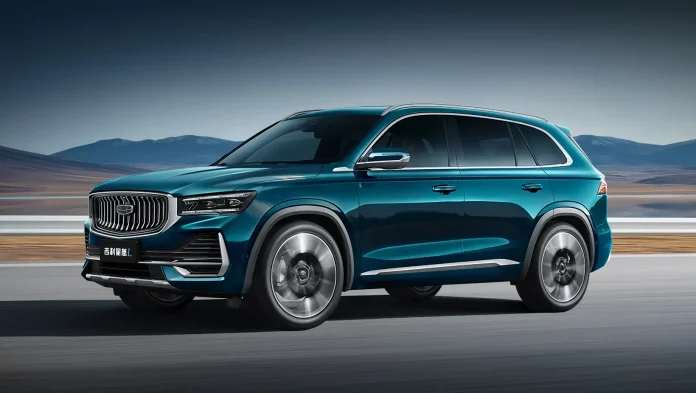
In the reshuffle among retail leaders, Geely Auto overtook long-time champion BYD for top position. Geely sold 1.021 million passenger vehicles in domestic retail during the first half, edging ahead of BYD’s 990,900 units by a margin of roughly 30,000 vehicles. Both companies posted year-on-year declines, reflecting the downturn across the sector, but Geely’s drop of 16.7% was far smaller than BYD’s 38.5%. Geely’s Galaxy series helped support its higher resilience and lift its new energy vehicle penetration.
Other ranking changes underscored how quickly the market is rotating. Changan and Chery held their positions at fourth and fifth, respectively. SAIC-GM-Wuling slipped from seventh to ninth. The most notable collapse was Great Wall Motor, which dropped out of the top ten retail list. The change was linked to Great Wall’s slower new energy transition: new energy vehicles accounted for about 30% of its domestic sales, well below the broader industry level that has exceeded 63%. Within its lineup, Haval faced mounting competition, the Tank brand showed signs of fatigue after rapid growth, Ora struggled with weaker market presence, while only Wey showed improvement after adjustments.
Leapmotor emerged as the standout gainer among top ten names, becoming the only company there to grow year-on-year. Its strategy of a wider product range—spanning microcars through family SUVs and MPVs—aimed at capturing demand during a period of “consumption downgrading” amid intense price competition. Leapmotor’s monthly retail sales neared 90,000 units in June, supported by a cost structure enhanced by developing more than 65% of core components in-house. The company’s focus on the 60,000–200,000 yuan price band has positioned it for buyers seeking value.
While the domestic market tightened, exports expanded into the sector’s main growth outlet. In the first half of 2026, China exported 5.096 million vehicles, up 65.3% year-on-year, and industry officials said exports were the primary driver of overall sales during the period.
That surge has produced a clear concentration at the top of global sales. Chery and BYD have effectively formed an “export duopoly,” collectively accounting for nearly 40% of China’s auto export market share. Chery led with 931,600 vehicles shipped in the first half, up 70.9%, representing a 21.9% share of exports. BYD exported 769,300 vehicles, up 73.6%, with an 18.1% share. Their combined dominance reflects strong overseas channels and localization built over many years.
Geely also showed sharp acceleration internationally, ranking third with 472,500 exports—up 158.3%—and reaching a level that exceeded its full-year total from 2025. SAIC Motor Passenger Vehicle ranked fourth with 404,200 exports, up 66.6%. Great Wall Motor ranked fifth with 256,000 exports, up 52.8%, with exports making up about half its sales and helping offset domestic pressure. Startup maker Leapmotor began to gain traction overseas as well, with first-half exports of 96,300 vehicles, up 372.6% year-on-year.
Looking ahead, the second half is expected to bring even stronger cost and technology hurdles. A mandatory national safety standard for new energy vehicles is set to take effect in July, with requirements related to crash safety and battery thermal safety—described as meeting standards aimed at preventing “thermal runaway without fire.” With higher manufacturing costs anticipated and additional policy shifts looming around hybrid tax exemptions in 2027, smaller automakers relying heavily on low-price volume strategies may face intensified difficulty.
Industry leaders characterize the current phase as an “elimination cycle” in a saturated market. With competition shifting from pure domestic scale to global reach and technical capability, the market’s direction is becoming clearer: those with technology depth, export channels, and manufacturing adaptability are best positioned to survive and grow.

