
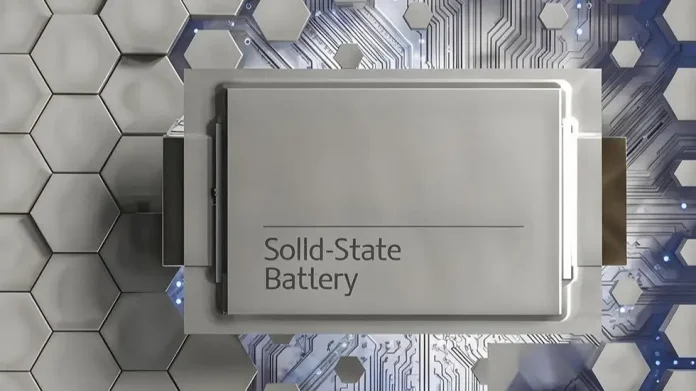
Chery Automobile has announced significant advancements in its all-solid-state battery technology. At a time when industry giants like CATL and BYD are still deep in research and development, the Wuhu, Anhui-based automaker has declared its intention to be among the first to install this next-generation power source in production vehicles. The announcement, made at Chery’s recent Battery Night event, positions the company’s new “Rhino” all-solid-state battery as a potential paradigm shift in electric vehicle (EV) performance, boasting metrics that far exceed current market standards.
Unprecedented Performance Metrics
The centerpiece of Chery’s announcement is the Rhino S, an all-solid-state battery that the company claims delivers a suite of industry-leading specifications. According to official data, the battery offers a cycle life of 300,000 kilometers, an energy density ranging from 450Wh/kg to 600Wh/kg—more than double or triple that of current high-nickel ternary lithium batteries—and a 6C ultra-fast charging capability that can add 500 kilometers of range in just five minutes. Furthermore, the battery is designed to retain excellent performance in extreme cold, with range attenuation controlled within 15% in -30°C environments.
Chery emphasized the safety advantages of the solid-state design. Unlike conventional liquid electrolyte batteries, the Rhino S cell is reportedly resilient even under severe duress; the company demonstrated that a cell can continue to discharge normally even with a corner cut off, mitigating risks of thermal runaway and leakage associated with current technologies.
For consumers, these parameters translate into a transformative ownership experience. A vehicle equipped with the Rhino S battery, such as the planned Xingtu ES8 shooting brake, is “expected to exceed 1,500 km” of cruising range on a single charge. The extended cycle life aims to shift EVs from being perceived as fast-depreciating “electronic consumer goods” back to “durable consumer goods,” potentially stabilizing resale values. Improved safety profiles could also lead to insurance premiums that are on par with traditional fuel vehicles.
Technological Strategy and Progress
Chery’s approach to overcoming the well-documented challenges of solid-state batteries—namely low ionic conductivity, lithium dendrite growth, and unstable solid-solid interfaces—involves a diversified, two-pronged strategy rather than committing to a single development route.
The first solution, targeting 450Wh/kg, utilizes a sulfide solid electrolyte combined with a high-nickel ternary cathode. Chery’s patent filings indicate they are tackling interface instability by doping the electrolyte with elements like active iodine to create a stable, highly conductive interface layer.
The second, more ambitious route aims for 600Wh/kg and employs an in-situ polymerized solid electrolyte with a lithium-rich manganese cathode. This “composite” approach blends oxide and polymer electrolytes, using nanoscale ceramic doping to achieve ionic conductivity comparable to liquid electrolytes.
Regarding production readiness, Chery revealed that the sulfide-based route has advanced to a pilot production line stage with a capacity of 0.5GWh. The company has filed over 217 patents covering the electrochemical system, cell processes, and production lines, and claims a yield rate of 92%—a figure that, if accurate, suggests the conditions for closing the mass-production cost loop are within reach. Mass production is targeted for 2027.
Critical Analysis and Market Context
While Chery’s announcement is undeniably bold, a closer examination reveals a narrative of progress tempered by the substantial hurdles of industrializing such advanced technology. Notably, while the cell’s energy density is projected to be three times higher than current lithium iron phosphate batteries, the vehicle’s range is only expected to improve by about 50%, from a current benchmark of around 1,063 km to a projected 1,500 km. This disparity suggests that challenges remain in battery pack structure, electronic control modules, and thermal management, which are critical for translating cell-level gains into vehicle-level performance.
Furthermore, an analysis of Chery’s timeline shows a degree of consistency with previous announcements. The mass production schedule and energy density targets remain largely unchanged from prior statements, with the technology being rebranded from “Kunpeng” to “Rhino.” This indicates that while single-point technological breakthroughs have likely been achieved, the overall development has not yet reached a definitive inflection point toward full-scale, cost-effective mass production. The industry consensus still places mature solid-state batteries three to five years out, suggesting Chery’s 2027 target is ambitious.
Chery’s aggressive push into all-solid-state batteries is underpinned by a strong financial foundation, as evidenced by its first annual report since going public, showing revenue exceeding 300 billion yuan and a 36.1% increase in profit. However, the gross profit margin for its passenger car business declined, with the new energy vehicle segment operating at a slim margin of just 8.8%. This financial pressure underscores why Chairman Yin Tongyue is unwilling to be dependent on external battery giants and is instead betting heavily on in-house developed, next-generation technology to secure the company’s competitive future.

