
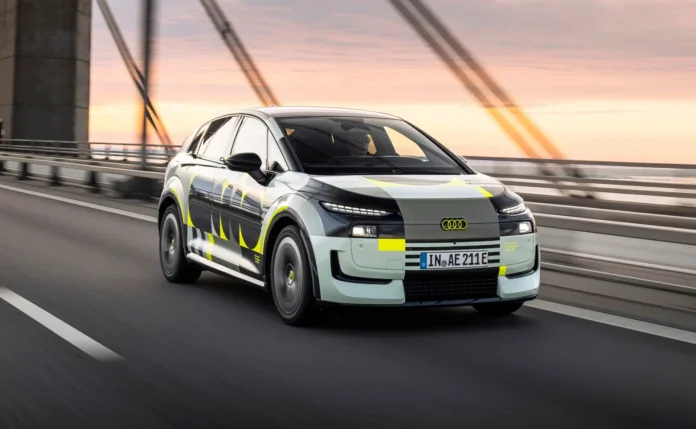
Audi has unveiled early efficiency figures for its upcoming A2 e-tron, describing the compact electric vehicle as the most energy-efficient model it has produced. Preliminary testing under the WLTP standard indicates energy use of 12.8 kilowatt-hours per 100 kilometers for the 140 kW version equipped with an optional efficiency package.
Audi says the result stems from a combination of aerodynamic refinements, drivetrain upgrades and battery optimization designed for everyday driving. The automaker also highlighted a drag coefficient of 0.24, which it says is the best figure in its compact lineup. To achieve it, the A2 e-tron uses a range of measures intended to smooth airflow and reduce turbulence, including air curtains and gap reducers around the wheel areas. An active cool-air intake is designed to remain closed during normal driving and at higher speeds to limit drag, opening only when needed—such as during charging, rapid acceleration or in hot ambient conditions.
The A2 e-tron’s drive system has been upgraded to improve efficiency. Audi pairs silicon carbide power electronics with changes to the motor hardware and transmission lubrication, including silicon carbide semiconductors aimed at reducing electrical switching losses and a revised stator winding intended to move the motor into more efficient operating ranges. The transmission uses a low-friction oil to cut drivetrain losses, while a taller 10.2:1 gear ratio is designed to keep motor speed lower at highway speeds.
Audi also pointed to the vehicle’s 61-kWh lithium iron phosphate (LFP) battery, describing it as both efficient and suited to frequent charging. The pack uses a cell-to-pack design that bonds cells directly into the housing to improve packaging density. Audi says the battery reaches 89.6% charging efficiency at the wallbox when the charging system and cooling strategy are used as intended, helping reduce wasted energy during everyday charging.
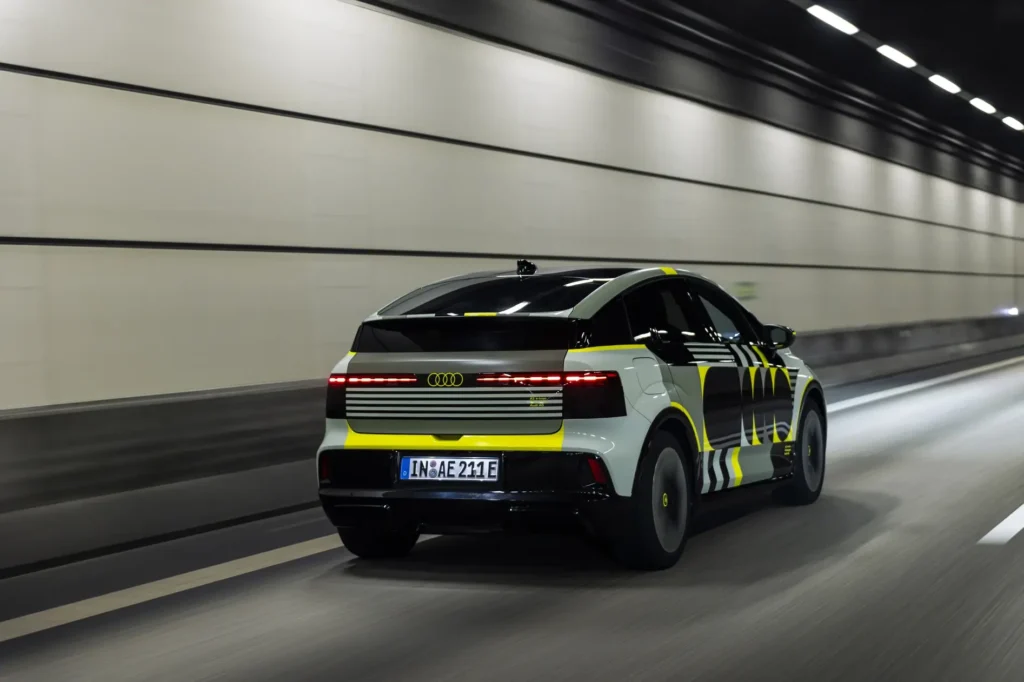
Beyond range-focused efficiency, the A2 e-tron will support bidirectional charging features. Audi says the vehicle can act as a home energy storage option through Vehicle-to-Home functions, and it can power external devices via Vehicle-to-Load. The automaker states that an Audi-recommended charging box will be required for these capabilities.
Audi’s chief executive, Gernot Döllner, said the company is carrying forward an efficiency-focused tradition tied to the A2 nameplate, which he described as having been defined by economical engineering since the 1990s.
Audi plans to unveil the A2 e-tron in autumn 2026, positioning it as an all-electric entry for the compact segment.

