
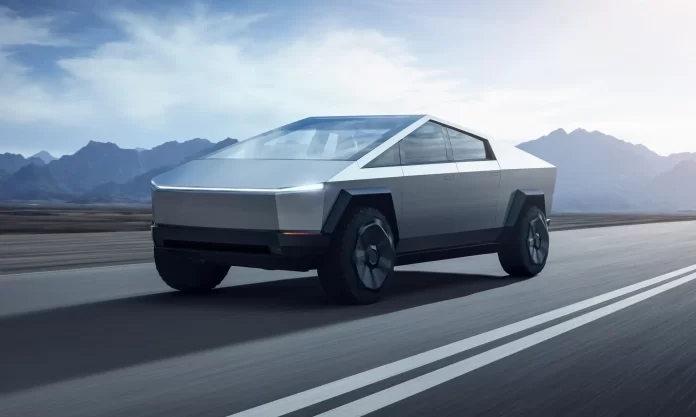
Tesla will stop building the Cybertruck at its Texas assembly plant around mid-2027, ending a four-year production run for the stainless-steel pickup. Chief executive Elon Musk announced the decision in a post on X on Friday, saying the factory space would be redirected to higher output of the Cybercab, a two-seat robotaxi with no steering wheel or pedals.
Musk did not say whether Cybertruck production would move to another site or end entirely. Tesla did not respond to a request for comment sent outside normal business hours.
The move is the third conventional vehicle Tesla has retired in recent months as it presents itself as an artificial intelligence and robotics company. Earlier this year, the company ended production of the Model S sedan and Model X SUV, freeing that factory space for Optimus humanoid robots.
A Sales Target Never Reached
When Musk delivered the first Cybertrucks in late 2023, he projected annual sales of roughly 250,000 vehicles, and at one point suggested a range of 250,000 to 500,000. Sales fell far short of those goals. Third-party estimates from Cox Automotive show the following trend.
| Measure | Figure |
|---|---|
| Musk’s original annual sales target | 250,000 (up to 500,000 floated) |
| U.S. sales in 2024 | 38,965 |
| U.S. sales in 2025 | 20,237, a 48 percent decline |
| U.S. sales in the first quarter of 2026 | 3,519, a record low |
| U.S. sales, January to September 2026 | 11,586, down 28 percent year on year |
| Share of the U.S. electric vehicle market, 2026 to date | 1.6 percent |
Tesla does not report Cybertruck sales separately. It groups the model with the Model S and Model X under an “Other Models” category, which totaled 8,295 deliveries worldwide in the third quarter of 2026.
Quality problems added to the commercial difficulties. A 2025 recall covered more than 46,000 vehicles over a trim piece that could detach. Pricing also moved far from the figure shown at the 2019 reveal, when the truck was advertised for under $40,000. The least expensive version eventually listed at $59,900, and the top-end Cyberbeast now costs $102,000.
The vehicle’s angular design also drew mixed reactions and created obstacles abroad. European crash rules place weight on pedestrian protection, and former auto industry executive Andy Palmer has said the truck’s sharp geometry makes approval difficult. Tesla has sold the model in only a handful of markets and canceled planned launches in Australia and New Zealand in October 2026, refunding deposits.
Demand was weak enough that Musk’s rocket company, SpaceX, became a notable buyer. It purchased $131 million worth of Cybertrucks last year for use as support vehicles. The two companies are exploring a possible merger, which Musk has described as “a good idea.”
The Robotaxi Strategy
The decision reflects a broader shift in Tesla’s business toward self-driving technology. The Cybercab began paid service in Austin in September 2026, and the company plans to make it the main vehicle in its robotaxi network, with customer deliveries targeted by the end of 2026. Vehicle engineering chief Lars Moravy told investors during the October earnings call that Cybercab production had started at the Texas plant.
Capacity figures require caution. Tesla’s third-quarter manufacturing disclosure listed installed annual capacity of more than 125,000 units each for the Cybertruck and Cybercab at the Texas plant. The company noted that installed capacity does not equal actual output, which depends on parts supply, equipment uptime, factory upgrades and regulation.
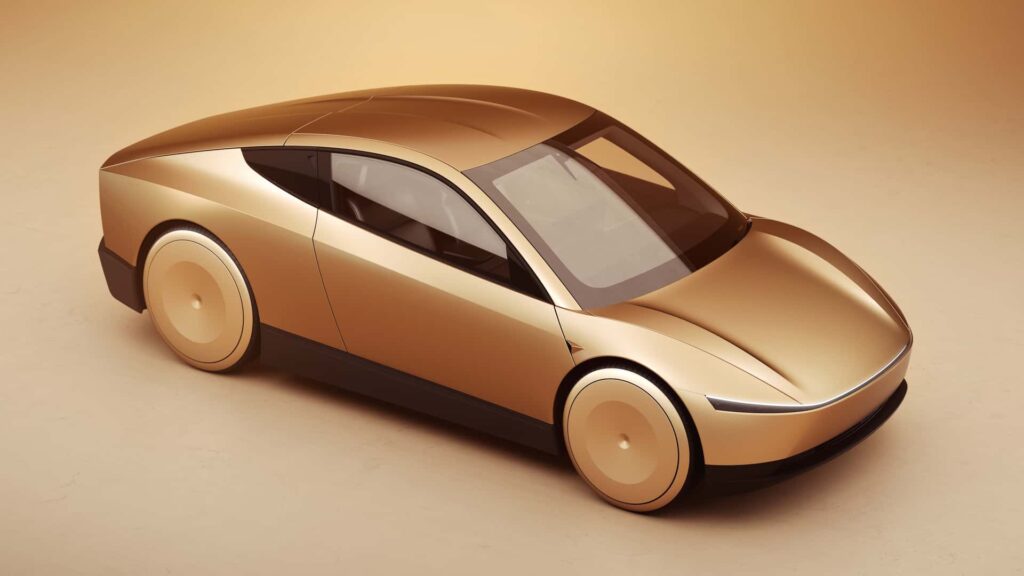
The Cybercab also faces regulatory scrutiny. The National Highway Traffic Safety Administration has asked whether Tesla self-certified the vehicle against federal motor vehicle safety standards. The agency’s inquiry is a special order rather than a routine review, and the company could face penalties of up to $139 million if it does not respond adequately.
Research and development spending rose to $2.76 billion in the third quarter, up from $1.63 billion a year earlier. Musk has said robotaxi operations could become “probably a big deal by Q3 or Q4 of next year.”
Market Reaction
The announcement comes during a difficult period for Tesla’s shares. The stock fell 10.77 percent on Thursday amid a broad technology sell-off and investor concern about Democratic wins in Texas midterm races, where Musk had spent more than $200 million supporting Republican candidates. Shares traded at $350.40 in premarket trading on Friday, up 1.95 percent. According to the Bloomberg Billionaires Index, declines in Tesla and SpaceX valuations cut roughly $80 billion from Musk’s net worth on Thursday, leaving him with $785 billion.
Analysts differ on whether the Cybertruck name will disappear entirely. CFRA Research analyst Garrett Nelson has said the truck is more likely to fade away than be formally discontinued. Tesla’s product plans now center on the Cybercab, Optimus and the Semi heavy truck, which entered volume production in April 2026. Key questions for investors include how quickly Cybercab output can grow, whether regulators approve the vehicle for wider use, and how the “Other Models” category changes as the pickup winds down.

