
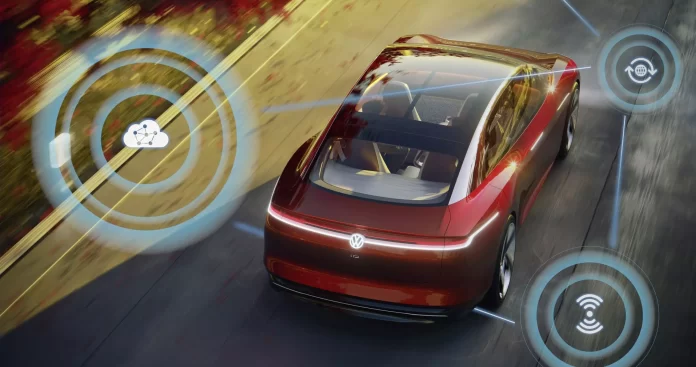
Volkswagen Group is building a shared data pipeline that could reduce physical test drives for autonomous vehicles by up to 90%, leveraging real-world driving data collected from its fleet to create simulation and training materials for advanced driving systems.
The automaker announced the initiative at Nvidia’s GTC Berlin conference, partnering with Porsche, Nvidia, Microsoft, and data platform company Voxel51. Porsche is leading the first implementation of what the companies call a “physical AI data flywheel” — a system that transforms raw fleet driving data into high-quality inputs for simulation, training, and validation.
The scale of Volkswagen’s data advantage is substantial. The group’s connected fleet generates data equivalent to 11,000 average drivers per day, providing a rich foundation for training autonomous driving systems. By converting this real-world experience into virtual testing scenarios, the partnership aims to reduce AI regression test cycles by up to 85% and accelerate development cycles for advanced driving software.
How the Pipeline Works
Voxel51 manages the data layer, handling tasks like search, automated labeling, scenario curation, and dataset balancing. The platform performs around 80 quality checks on each recording before reconstruction, examining sensor integrity, timing, calibration, and other factors that could compromise simulation accuracy. A single miscalibrated sensor can render hours of GPU reconstruction time worthless if not caught early.
Nvidia contributes technology for data generation and scene reconstruction, including its Cosmos Data Factory for preparing and augmenting training data and Omniverse NuRec libraries for reconstructing real-world drives into usable simulations. Microsoft Azure provides the infrastructure, hosting the workloads while maintaining Volkswagen’s existing security and governance standards.
The first application is virtual validation — testing new driving software releases on reconstructed real-world scenarios rather than conducting expensive physical test drives. Engineers can compare simulated outputs against real-world measurements to identify failures and iterate faster.
Industry Implications
The development signals a broader industry shift toward data-driven autonomous vehicle development. Hyundai is pursuing a similar approach, and recent announcements from Nissan suggest that software validation has become one of automotive’s main bottlenecks. Automakers increasingly recognize that competitive advantage will rest on the quality and scale of proprietary data rather than the tools themselves.
However, the strategy faces regulatory hurdles. Cutting physical test drives by 90% depends on approval from homologation authorities to accept simulation evidence as validation, a practice European and UNECE automated driving rules currently permit only within defined limits.
The partnership also underscores a paradox: while Volkswagen champions European technological sovereignty, its autonomous vehicle pipeline relies heavily on American technology providers — Nvidia, Microsoft, and Voxel51 — reflecting the current dominance of U.S. companies in AI infrastructure and data platforms.

