
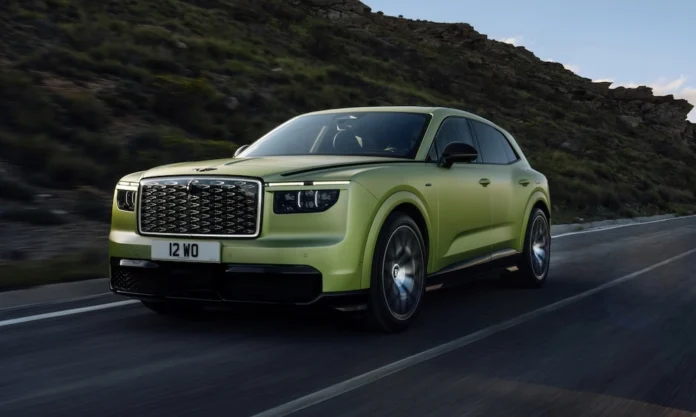
Bentley has unveiled the Torcal, its first fully electric vehicle, a five-seat luxury SUV positioned as an entry point to the century-old British brand at a starting price of £173,000 (approximately $230,000). The vehicle launches amid tepid demand for luxury electric vehicles, with competitors like Lamborghini delaying their EV plans and McLaren forgoing them entirely.
The Torcal represents a calculated gamble: that wealthy customers will embrace electrification without sacrificing the sensory and design identity that defines Bentley. Rather than reinventing the brand for the electric age, Bentley has doubled down on heritage, retaining the visual language of its combustion-engine vehicles, including diamond-shaped headlights that evoke a traditional grille despite having no radiator to cool.
The most distinctive feature is audible rather than visual. Instead of synthesizing an artificial engine sound, Bentley recorded real instruments—timpani, viola, and bass guitar—to create what the company calls a Dynamic Symphony. The drum-based soundtrack rises and falls with throttle input, quickening during acceleration and customizable through driving modes. Even the indicator sounds and digital-assistant wake note were crafted with orchestral intention, modeled on running a finger around a crystal glass rim.
“Our intention was always to make a Bentley first,” said Frank-Steffen Walliser, Bentley’s chairman and chief executive. “We feel people are not asking for a completely different car just because it’s electric.”
Performance and Range
The Torcal arrives in two variants. The base model produces 810 horsepower, accelerating from 0 to 60 mph in 3.3 seconds with a top speed of 155 mph. The Torcal S delivers 875 hp, achieving 0-60 in 2.8 seconds and reaching 162 mph. At 995 lb-ft of torque, the S variant produces more torque than any Bentley in history. Notably, engineers deliberately capped acceleration, recognizing that most customers find extreme performance uncomfortable.
The 113 kWh battery provides up to 375 miles of range on the WLTP cycle, with EPA estimates forthcoming before the vehicle reaches U.S. showrooms early next year. DC fast charging at up to 400 kW can replenish the battery from 10 to 80 percent in under 20 minutes, adding roughly 100 miles in seven minutes.
Design and Interior Innovation
The Torcal measures just under 5 meters in length, making it 161 millimeters shorter than the existing Bentayga SUV while offering exceptional interior space. The cabin showcases materials Bentley describes as automotive firsts: 100 percent Merino wool fabric developed with Fox Brothers and an Ombré Walnut veneer pressed from up to 1,000 layers of walnut off-cuts and recycled paper, then sliced to less than a millimeter thick.
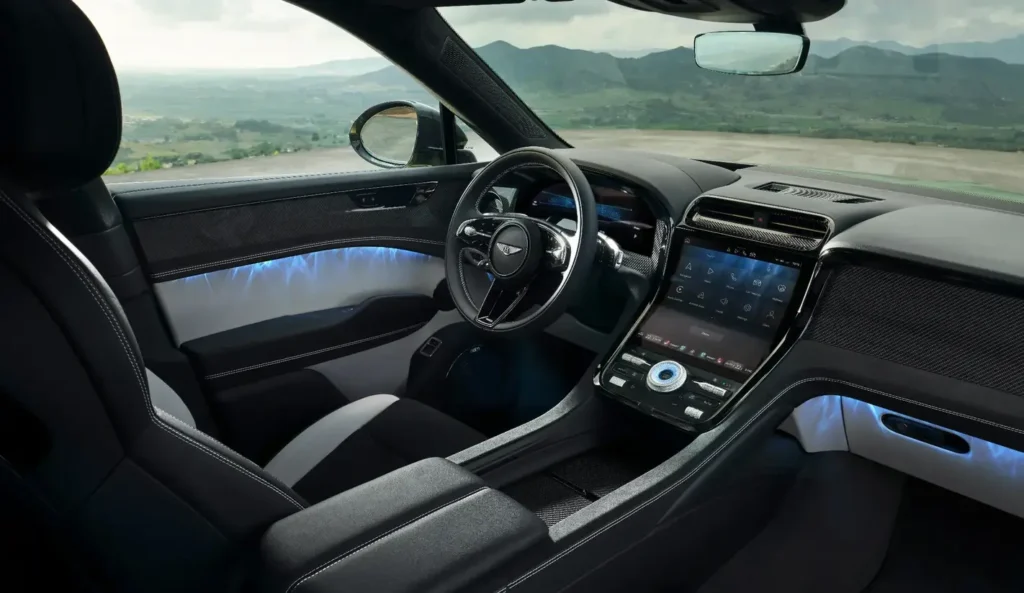
Seating includes up to 16-way adjustment with heating, ventilation, and massage functions. An optional Naim audio system delivers 1,780 watts through 28 speakers, including units in seats and headrests. The cabin deliberately omits a separate passenger infotainment screen, with air vents directed through the curved central touchscreen rather than traditional design elements.
Market Positioning and Investment
Bentley is backing the Torcal with a £350 million investment in its Crewe plant, where the vehicle will be manufactured. The investment supports approximately 4,000 high-value local jobs and strengthens supply chains involving more than 700 businesses, with 82 suppliers operating within a 50-mile radius.
The Torcal undercuts Ferrari’s recently launched Luce EV, which starts at approximately $630,000, by nearly $400,000, positioning it to attract buyers from the premium luxury segment rather than direct competition with ultra-luxury rivals. Early interest has split evenly between existing Bentley customers and newcomers to the brand.
The timing is precarious. Luxury EV adoption has stalled, with Rolls-Royce’s Spectre coupe experiencing sharp sales declines. Bentley itself previously abandoned plans for annual EV launches and pushed its full electrification target from 2030 to 2035, acknowledging poor demand.
Walliser acknowledged the uncertainty candidly. “We managers always say we know but to be honest we don’t know how much demand there will be,” he said, adding that there are “no plans at the moment” for a second EV launch. Whether Bentley’s 107-year heritage, innovative interior materials, and distinctive symphony soundtrack prove sufficient to overcome the luxury EV market’s challenges will become clear when customer deliveries begin.

