
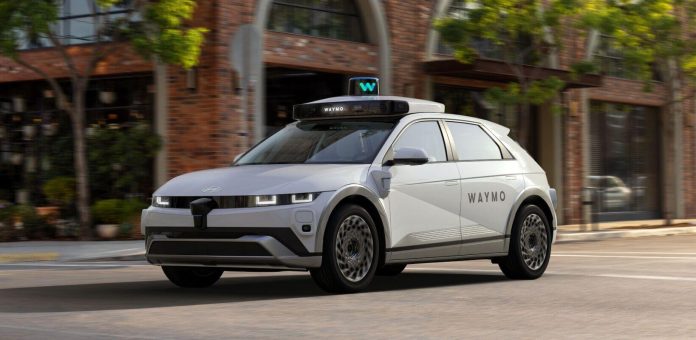
Hyundai Motor Group is developing Level 2+ autonomous driving technology for gasoline-powered and hybrid vehicles, expanding its plans beyond electric vehicles (EVs).
The automaker plans to launch an EV-based autonomous vehicle in 2028 before extending the technology to internal-combustion and hybrid models. Level 2+ systems can control acceleration, braking and lane changes, but require the driver to remain responsible and supervise the vehicle.
Hyundai is reportedly the only global automaker to have officially committed to developing autonomous driving systems for gasoline and hybrid vehicles. Tesla and several Chinese automakers have focused primarily on autonomous driving for EVs, while Toyota, General Motors and Mercedes-Benz have yet to produce significant results in applying similar systems to internal-combustion models.
An industry insider said demand for gasoline and hybrid vehicles is likely to remain steady even as autonomous driving becomes more widespread. Hyundai’s strategy is intended to establish an early position in a market that EV-focused competitors may find difficult to enter.
Adapting autonomous driving technology to internal-combustion vehicles presents several technical challenges. The most significant is the power supply. Autonomous driving computers, cameras and lidar sensors require a constant supply of electricity. EVs can draw on large batteries, but gasoline vehicles must rely on engine-powered generators and may require separate power sources for high-performance computing, sensors and cooling equipment.
Integration with the engine, transmission and braking systems is another obstacle. Electric motors can respond quickly to commands from autonomous driving computers. Gasoline engines, however, require air and fuel intake, combustion and power transmission through the gearbox. Software must coordinate these processes, along with braking, to accurately follow the vehicle’s intended path despite delays in the powertrain.
Cooling the autonomous driving hardware is also difficult. EVs generally have thermal-management systems designed to cool batteries and power electronics. Internal-combustion vehicles may require a new water-cooled circuit and a broader redesign of their thermal architecture to prevent autonomous driving computers from overheating.
Hyundai is relying on decades of experience in developing and controlling internal-combustion engines and transmissions to address these issues. The company has reportedly made progress in integrating engine and transmission systems and is researching how to position and cool autonomous driving computers.
A Hyundai Motor Group official said the company ultimately expects autonomous driving performance and safety to be comparable across EVs, gasoline vehicles and hybrids.
The technology is not expected to be introduced across Hyundai’s entire gasoline and hybrid lineups. Instead, it will likely be reserved for models with strong future demand or those whose vehicle systems are ready for autonomous-driving integration.

