
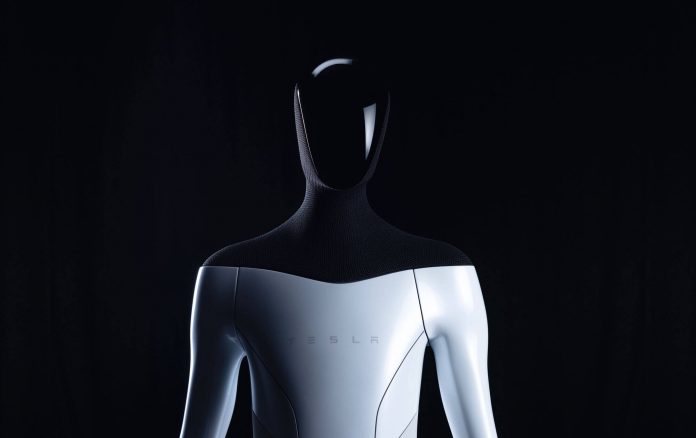
Tesla is dismantling the production lines for its Model S and Model X at the Fremont, California plant to make space for new manufacturing dedicated to its Optimus humanoid robot, a move the company says underscores its shift toward what it positions as a robotics future.
The transition is happening quickly. After Tesla disclosed that it had begun shutting down the Model S/X lines, the company dismantled the old equipment and repurposed the most central workshop space at Fremont in a reported 46 days—making way for an Optimus production setup. Fremont is Tesla’s key manufacturing hub and has supported earlier development work across batteries and vehicle platforms, as well as the early trial production of Optimus.
The change follows Tesla’s announcement in January that it would stop producing the Model S and Model X and use available capacity at the California plant for Optimus. Initially, many observers reacted with surprise. The Model S and Model X have long represented Tesla’s high-end vehicle identity, and the Model S is often cited as the starting point for Tesla’s push to prove that electric vehicles could outperform internal-combustion cars in mainstream competition.
However, the decision appears tied to both market realities and Tesla’s long-running effort to reposition itself beyond autos. Over the past five years, Tesla’s valuation narrative has increasingly leaned on expectations that its AI and robotics efforts—rather than vehicle deliveries alone—will drive long-term returns. Internally and in public communications, Elon Musk has repeatedly emphasized that Tesla is becoming an AI and robotics company, and the company’s later urgency reflects mounting pressure from competitors and shifting investor patience.
A central issue is timing. Tesla’s Full Self-Driving (FSD) and Robotaxi roadmaps—once framed as near-term milestones—have repeatedly slipped. Those delays have mattered because Wall Street’s valuation has, to a large extent, depended on “pre-paying” for future autonomy and robotics progress. When concrete delivery timelines move, the gap between market expectations and operational proof becomes harder for investors to justify.
At the same time, Tesla faces a tougher competitive environment in China, where newer manufacturers have narrowed—or challenged—Tesla’s traditional advantages. Competitors have matched or surpassed Tesla on key technology such as batteries and high-voltage platforms, compressed pricing power through aggressive value offerings, and reduced the branding edge Tesla once drew from a “tech-driven” image. As a result, Tesla’s growth in China has slowed, even as its Model 3 and Model Y volumes remain substantial, with the broader market outpacing it.
Against that backdrop, Tesla has accelerated its push for Optimus as a potential “second growth curve”—a tangible, physically measurable product intended to restore confidence in its robotics narrative. In the Fremont redevelopment, the underlying logic is described as practical arithmetic. Model S/X output at the plant is estimated to be on the order of 60,000 to 80,000 units annually, far below the line’s designed capacity of roughly 100,000 units per year—meaning the company is effectively paying to maintain a high-complexity vehicle line that is not using its potential.
The freed Fremont space is instead being repositioned for Optimus manufacturing. Tesla has disclosed planned annual Optimus production capacities for two locations: Fremont in California and Austin in Texas, with Fremont slated for 1 million units and Austin for 10 million units per year. The Fremont workshop is especially valuable because of its role in Tesla’s iterative manufacturing development, including trial work tied to next-generation systems and early Optimus activity.
Optimus production is also portrayed as benefiting from technical overlap with existing vehicle technology. Optimus is described as relying on numerous actuators and motor-driven components, with the building blocks—motors, reducers, sensors, and controllers—highly related to Tesla’s traction motor, braking, steering, and thermal-control know-how. That overlap matters because it can reduce how much Tesla must build from scratch while accelerating learning.
Still, Musk has emphasized that scaling Optimus will be difficult. Unlike vehicles that can lean on established suppliers for many mature components, Optimus is said to require new manufacturing capability across thousands of parts. The ramp-up is expected to follow an “S-curve,” beginning relatively flat because early production is constrained by novelty and parts readiness. Even so, the argument presented is that shutting down the underutilized Model S/X line is not simply reducing capacity—it is reallocating engineers, tooling, supply-chain relationships, and manufacturing expertise to a product with potentially larger long-term payoff.
In short, Tesla’s decision to dismantle the Model S/X lines at Fremont is presented as a calculated pivot: a move to stop maintaining a declining, costly-to-run platform in order to concentrate limited factory space on a robotics business timed to the next phase of investor expectations.

