
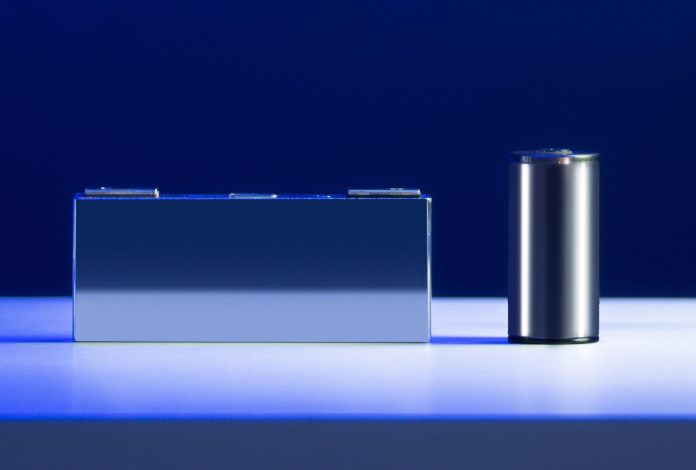
Japan’s prestigious universities Tokyo University of Science and Waseda University are among the 14 participants who launched an industry-academia-government project to expedite sodium-ion battery developments aiming for practical applications by the mid-2030s. GS Yuasa Corporation, produces mission-critical battery solutions for industries like aviation, announced on July 9 as the project’s joint developer the program aimed to accelerate the market launch of innovative batteries that combine high performance with reduced resource-procurement risks. Sodium-ion batteries largely meet these goals as its core component sodium abundantly available and relatively easy to extract form seawater. The development project is backed by state support through the Innovative Storage Battery Technology Development and Advanced Analysis program granting ¥800 million (roughly $4.9 million) financial subsidy over two years.
Give weight for the initiative, the project lead is Professor Shinichi Komaba of Tokyo University of Science, who was the first in the world to demonstrate the stable operation of a rare-metal-free sodium-ion battery. At the project’s announcement Professor Komaba said “By accumulating Japan’s technological expertise and basic research, we want to create something that surpasses existing sodium-ion batteries.” Added that at the laboratory level the technology had already been established and “this project marks the commencement of full-scale technological development toward practical application”. In Jul 2025 the university announced advancements in its sodium-ion battery technology by using copper doping in cathode materials, which is critical in the stability of sodium-ion batteries, effectively eliminating the stacking faults that impede battery performance during charging and discharging cycles. The innovation extends the lifespans of sodium-ion batteries by multiple times.
As for GS Yuasa, the company stated it had independently been developing sodium-ion batteries with performance comparable to conventional lithium-based batteries. Its role in the project will be design verification, prototype fabrication and demonstration of next-generation sodium-ion battery cells using existing lithium-ion battery facilities. Initially the project will focus on cell and system developments for application cases of stationary batteries, which are mostly used in grid installations with backup functions and to mitigate low and peak time volatility in green energy generation.
The initiative for acceleration of sodium-ion battery developments addresses some of the strategically important key pain points in the Japanese economy as the country is a net energy importer and its industrial raw material sourcing hugely relies on overseas supply. Integrating sodium-ion batteries, which completely eliminate the need for using rare-metals, into stationary battery systems and transportation vehicles at scale delivers multiple macro level benefits through reducing dependency on foreign energy and raw material sourcing and boosting a self-sufficient green energy transmission.

