
AI Cuts Automotive Design Cycles as Engineers Evaluate Thousands of Variants
Jaguar Land Rover Doubles Aerodynamic Iterations After AI Surrogate Models
Engineering teams in the auto industry are seeing a dramatic shortening of design timelines as AI surrogate models move parts of the development process from “weeks and months of iteration” toward near-real-time exploration of design options.
Thomas von Tschammer, chief executive of Neural Concept, says the technology is enabling automakers to evaluate thousands of design variants per day—far more than the “dozens” typically possible with conventional workflows. Instead of relying only on repeated physical prototyping and lengthy simulation runs, engineers use AI models trained to predict key physical outcomes, allowing them to rapidly screen large design spaces and bring forward only the most promising candidates for high-fidelity verification.
A striking example cited by von Tschammer involves Jaguar Land Rover (JLR). After AI surrogate models were integrated into its aerodynamic workflow, the number of designs JLR’s team could evaluate jumped from about 50 per day to roughly 1,500 per day, a 30-fold increase. The change is especially relevant because aerodynamics directly affects electric-vehicle range. Even small improvements in drag can translate into meaningful extra miles per charge, he argues—gains that are difficult to find reliably when teams must manually tweak computer-aided design models and wait hours for traditional physics solvers.
The approach is not meant to replace traditional engineering tools entirely. Rather, it acts like a two-stage funnel: AI performs broad exploration quickly, then conventional simulation systems step in to validate the final short list. Von Tschammer describes surrogate models that ingest 3D geometry and return outputs in minutes, including estimates of aerodynamic coefficients, thermal distributions, deformation under loads, and other engineering metrics—without “solving differential equations from scratch,” as would be required by many classic solvers.
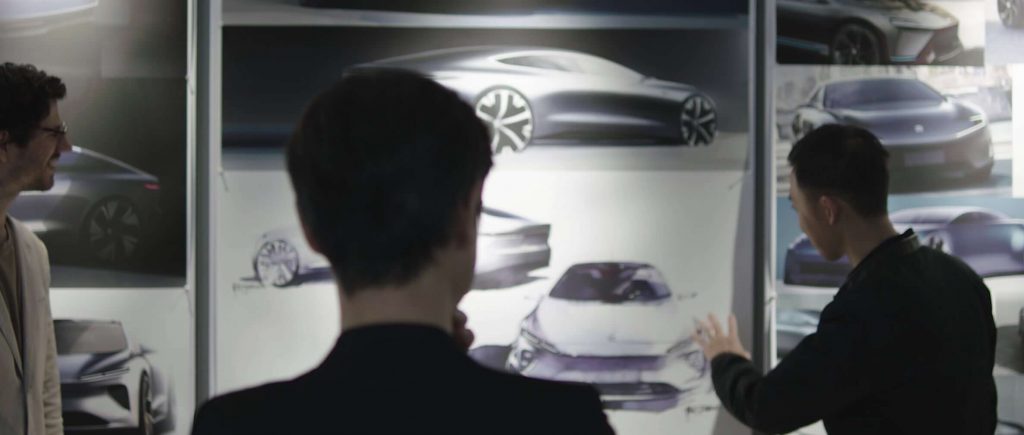
The pressure to move faster is intensifying. Von Tschammer points to a major competitive discrepancy between regions in how quickly new vehicles reach production. Chinese automakers can reportedly move from concept to production in about 18 to 24 months, while Western automakers often take around 48 to 60 months. He argues that AI-driven engineering is one of the most accessible levers for incumbents to close that gap, particularly because it can compress development cycles without requiring an entirely new manufacturing system.
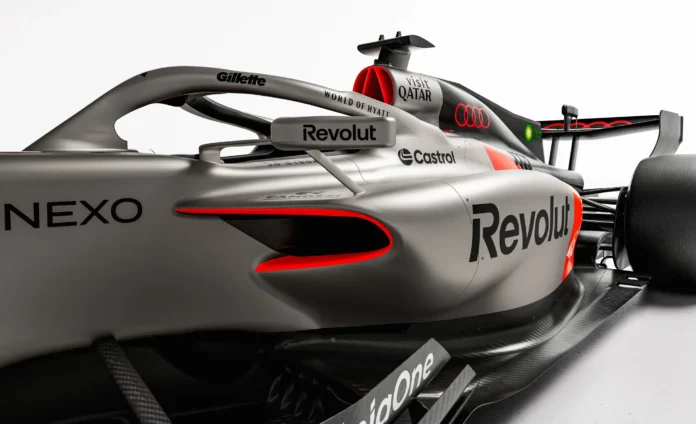
Formula 1 teams, constrained by limits on how much simulation time they can run, are increasingly adopting AI-driven design loops as a competitive advantage. Von Tschammer says teams can run automated overnight processes that take next-race track requirements, generate thousands of aerodynamic variants, simulate them in batches, and deliver a morning dashboard of optimal trade-offs. In his view, this makes Formula 1 a demanding proving ground for AI efficiency under real limits—turning computation into a weapon.
One of the most provocative claims von Tschammer makes is that AI sometimes produces designs experienced engineers initially reject as wrong. He compares the phenomenon to AlphaGo’s “Move 37,” a move that violated human intuition but proved effective. Similarly, von Tschammer says engineers at customer organizations have reported cases where AI-generated configurations looked like mistakes at first, yet ultimately outperformed conventional solutions. That creates a cultural challenge for engineering organizations: senior experts must learn to evaluate AI results, interpret why they work, and trust solutions that may not fit long-held intuition.
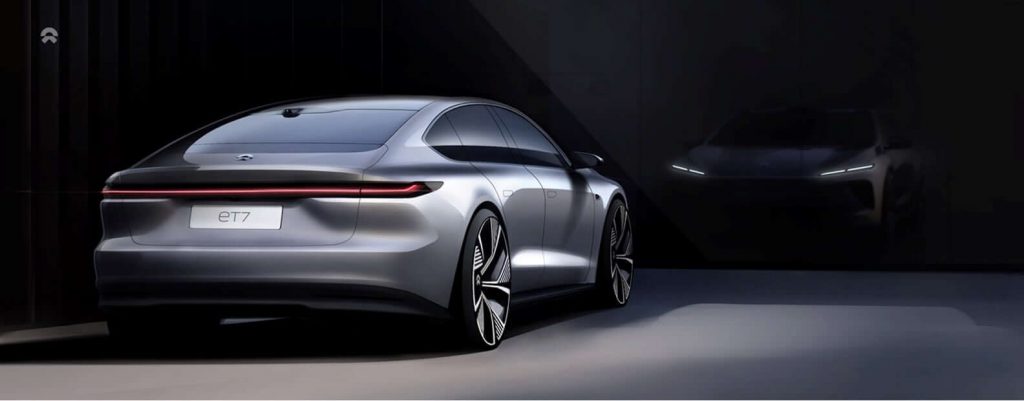
That human-in-the-loop approach is central to how the technology is deployed. Von Tschammer says the AI does not simply output a finished car; instead, it generates a large space of potential configurations and engineers select among trade-offs aligned with brand goals, manufacturing constraints, and safety requirements. Liability also remains a major reason AI cannot be left alone: crash structures and other safety-critical components still require human sign-off.
Neural Concept’s roadmap emphasizes integration rather than wholesale replacement. Von Tschammer outlines a two-phase adoption plan. In the first year, he suggests achieving a 20% to 40% speedup in core engineering disciplines by embedding AI surrogate models into existing workflows. By year two, the goal is 50% to 60% reduction in total cycle time by coordinating previously siloed teams—such as aerodynamics, crash safety, thermal management, and cost engineering—so that trade-offs are considered together rather than negotiated late in the process.
For companies looking to adopt such systems, von Tschammer argues the biggest long-term differentiator may be data rather than individual talent. Every simulation run and physical test result fed into an AI engineering model can improve accuracy and expand coverage. That compounding “flywheel” effect can build barriers to entry because competitors that start later may lack the same proprietary training data and therefore cannot catch up quickly.
Finally, he says the economics of engineering tools may shift as AI takes on more autonomous work. Neural Concept currently charges using a mix of seat-based and compute-based pricing, but von Tschammer expects movement toward value-based pricing tied to outcomes. If AI enables measurable improvements—such as better battery cooling design performance or manufacturing cost reductions—the pricing model may no longer reflect how many engineers use the system, but instead how much value the technology helps generate.
The bottom line, von Tschammer says, is that the engineering loop already common in Formula 1—AI exploring at scale, engineers curating and validating—may become standard practice for mass-market automakers in the coming years. The race, he suggests, will be about who gets their “engineering DNA” encoded into continuously learning AI systems first, and who finds themselves watching competitors pull ahead.

