
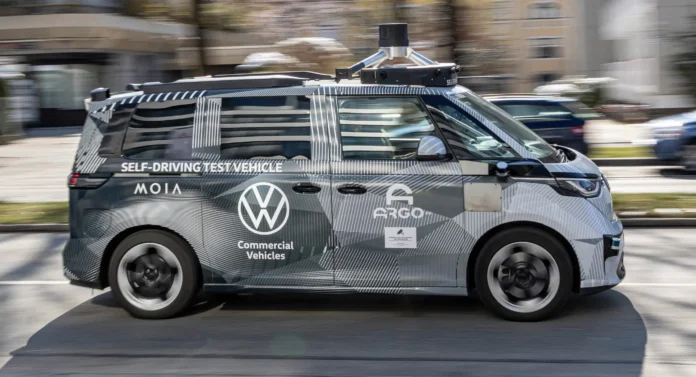
Volkswagen is set to end its autonomous driving software partnership with Bosch after a €1.5 billion investment failed to deliver the competitive edge the German automaker had expected, according to a report by Bild Zeitung on June 28.
The collaboration, launched in 2022 between Volkswagen’s software unit Cariad and Bosch, was designed to co-develop driver assistance and autonomous driving technology for vehicles across the Volkswagen Group’s brand portfolio. However, internal assessments cited by Bild concluded that the resulting technology “was not yet competitive,” despite the scale of spending. The report adds that Volkswagen intends to unwind the deal in line with contractual terms, with the final termination not expected to be earlier than June 29.
The decision comes as Volkswagen moves deeper into cost-cutting and restructuring efforts aimed at restoring competitiveness. Bild reports that the company is considering factory closures in Germany—potentially shutting four plants—and workforce reductions that could reach up to 100,000 jobs. The autonomous driving partnership appears to be another example of how the automaker is re-evaluating projects that do not meet performance or timeline expectations, while redirecting resources toward areas it views as more promising.
Volkswagen’s next step is to rebuild its autonomous driving supply chain by sourcing both hardware and software from new partners. Bild says the selection process for alternative suppliers is currently underway, with Volkswagen targeting contract finalization as early as September. The names of those prospective partners have not been disclosed in the report, but the wider market includes dedicated autonomy and driver-assistance players—alongside major semiconductor and platform suppliers that offer software stacks designed to integrate with vehicle electronics.
Bosch and Cariad, for their part, issued a joint statement acknowledging their long-term cooperation and stating that they “regularly review our development partnership” to ensure it matches strategic and technological goals as well as changing market conditions. The companies also said they do not comment on market rumors. While the statement does not explicitly confirm a complete severing of work, its wording suggests the companies are actively re-assessing the scope of collaboration, even if the current structure is being terminated.
Industry observers say the move underscores how difficult it remains to commercialize autonomous driving at scale. The Bild report situates the decision within a broader pattern of autonomy partnerships being reshaped or curtailed as timelines stretch and budgets tighten. The report notes that other efforts across the sector—such as Argo AI, which was shut down in 2022 after being backed by Ford and VW, and GM’s Cruise, which has faced significant downsizing—have also reflected the challenge of turning long R&D cycles into widely adopted, cost-effective products.
For Volkswagen specifically, the breakdown of the Bosch partnership adds pressure to an already strained software transition. Cariad has faced repeated development delays and management turnover, contributing to schedule risks for new vehicles across the group. With electrification taking longer than planned and competition intensifying—particularly in China where both local EV makers and price-focused brands continue to raise expectations—Volkswagen appears to be trying to simplify execution and concentrate on suppliers it believes can move faster and deliver more commercially viable technology.

