
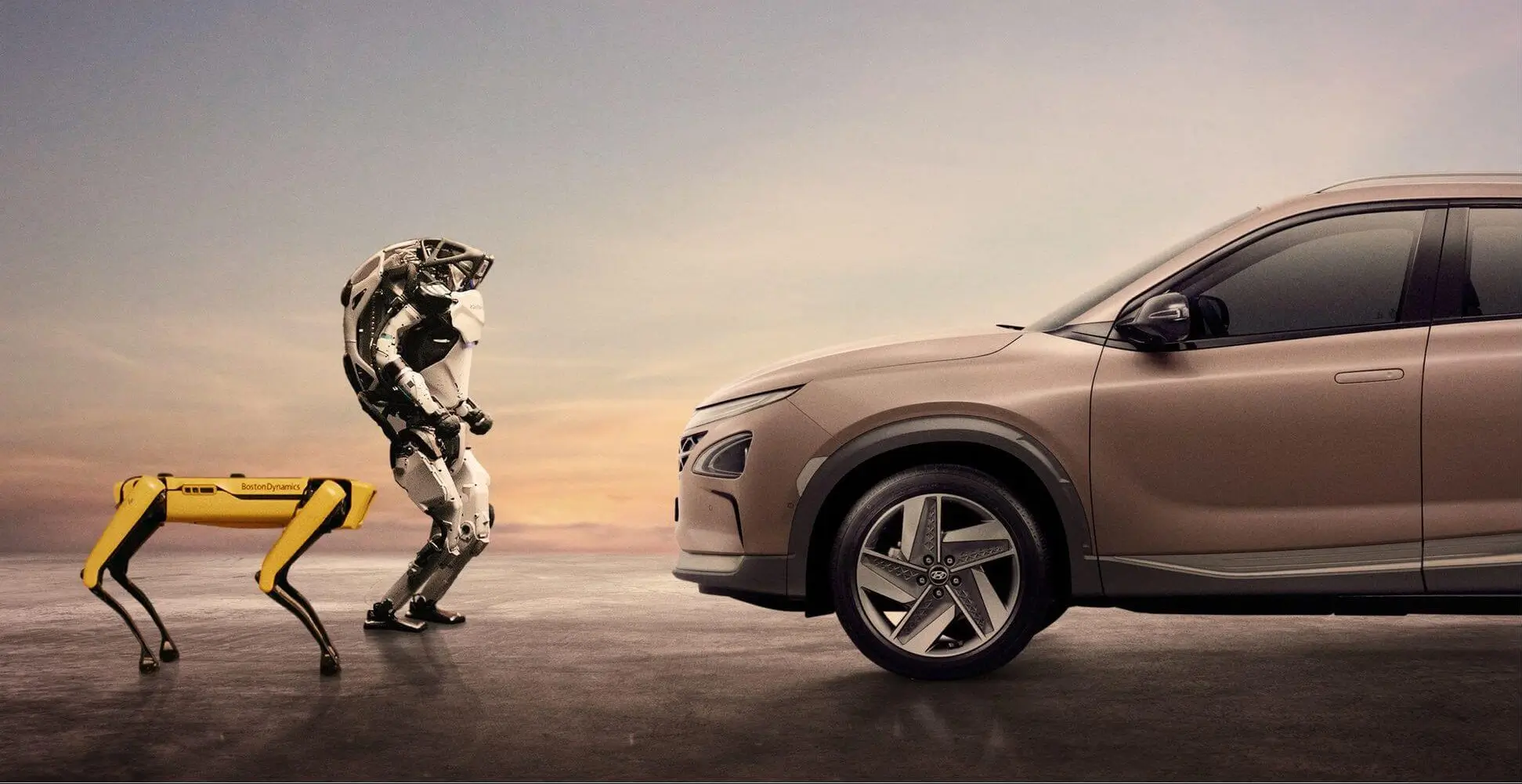
Automaker to Data‑Platform: Hyundai Bets on Robots and Motion Analytics for Growth
Hyundai Motor Group is moving decisively into the physical-world era of artificial intelligence, announcing plans to field tens of thousands of humanoid robots and to monetize the movement data those machines generate — a strategy executives and analysts say could reposition the automaker as a “Physical AI” platform company.
At the center of the plan is Boston Dynamics’ Atlas humanoid. Hyundai Motor has disclosed intentions to deploy more than 25,000 Atlas units across its global production facilities, while Hyundai Mobis — the group’s parts and systems arm — will supply the actuators required for large-scale humanoid production at a targeted pace of 350,000 units per year by 2028. Boston Dynamics, for its part, is preparing to scale manufacturing capacity toward roughly 30,000 humanoid robots annually under the emerging supply chain arrangement.
Executives and market observers emphasize vertical integration as Hyundai’s key differentiator. By combining robot deployment on live production lines with in‑house component manufacturing and data collection, the group aims to accelerate iteration cycles, reduce costs and lock in proprietary datasets that are difficult for competitors to replicate. “There are effectively two companies capable of independently developing advanced humanoid robots, deploying them at scale on their own manufacturing lines, and building a mass production system: Tesla and Hyundai Motor Group,” said Eugene Hwan, executive director of product strategy at Samsung Asset Management.
Hyundai is also building an explicit data strategy around motion and operational telemetry. The company plans to open a Robot Motion Analytics Center (RMAC) at its Georgia, U.S., plant in the third quarter. The RMAC will centralize physical motion data from deployed robots, with Hyundai projecting that such datasets could become a revenue stream — sold or licensed to Big Tech firms and AI developers including prospective customers like Google and Nvidia. That ambition reframes the group’s robotics push as more than shop-floor automation: it is a move to become a platform that supplies both hardware and the physical-world training data AI firms need.
Financial markets have responded to the plan with bullish assessments for component suppliers inside Hyundai’s ecosystem. On June 16, Yuanta Securities raised Hyundai Mobis’ target price from 560,000 won to 870,000 won, arguing the supplier should be viewed as a Tier‑1 hardware platform provider for the humanoid industry rather than a conventional auto parts maker. Analyst Kim Yong‑min noted that Boston Dynamics’ mid‑to‑long‑term growth will likely correlate strongly with Hyundai Mobis’ actuator business, and that broader third‑party adoption of those components could extend benefits beyond the Hyundai Group.
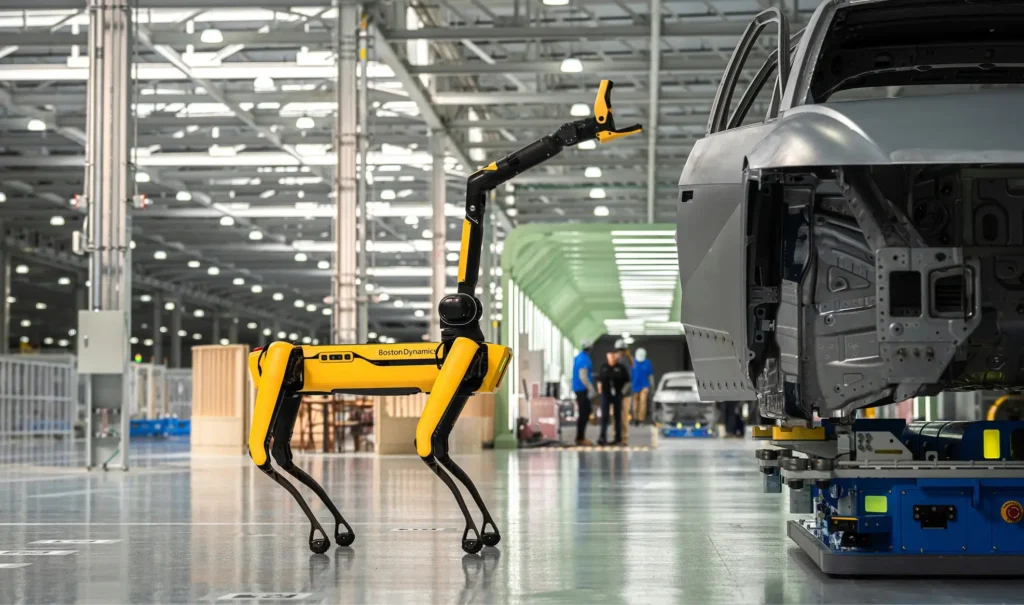
Ownership ties reinforce the strategic alignment: Hyundai Mobis together with Hyundai Motor and Kia control a 56.5% stake in Boston Dynamics via HMG Global; Chairman Euisun Chung personally holds 22.6%, and SoftBank retains a minority stake. That mix of ownership and supplier relationships underpins the group’s aim to transition from manufacturing vehicles to operating a large-scale robotics and data platform.
Market analysts point to demographic pressures and rising labor costs as structural drivers for the move: with labor shortages hitting manufacturing globally, robots offer a path to stable production and productivity gains. Investment vehicles — notably ETFs that track the robotics value chain, including Boston Dynamics, Hyundai Mobis and the automakers deploying the hardware — are being highlighted as efficient ways for investors to gain exposure to this multi-layered ecosystem.
Hyundai Motor Group’s strategy marries industrial execution with an explicit data-play: by putting humanoid robots into real production environments at scale, the company hopes to convert operational know‑how and motion telemetry into a competitive moat and commercial product. If successful, the transformation would mark a substantial shift in the group’s identity — from automaker and parts supplier to operator of what it describes as a global Physical AI platform.

