
Autonomous driving is entering a decisive phase where commercialization, regulation and a deep technical shift in model architectures are colliding to reshape strategies across automakers, suppliers and chipmakers. Recent market moves—Tesla’s May 21, 2026 announcement that a supervised variant of its Full‑Self Driving system has been approved for China (later relabeled “Tesla Assisted Driving”) and a fresh wave of IPOs and listings from autonomous‑driving vendors—underline accelerating efforts to convert technical progress into paid services. At the same time, however, a model‑paradigm transition from CNNs and Transformers toward diffusion‑ and world‑model architectures is forcing a reevaluation of chip design and compute priorities, heralding what some call the sector’s potential “ChatGPT moment.”
The strategic fault line remains the L3 versus L4 roadmap. Industry incumbents such as Huawei argue for a stepwise L2→L3→L4 progression to accumulate safety data, regulatory experience and consumer trust; China’s MIIT has already issued L3 permits to models like the Changan Deepal SL03 and BAIC ARCFOX Alpha S for limited highway pilots. Conversely, “leapfrog” proponents—including XPeng leadership—contend that intermediate L3 systems perpetuate dangerous human–machine handover ambiguity and that resources should be concentrated on directly achieving L4 driverless capability. That debate has real commercial implications: L3 certification creates a compliant route to market, while skipping L3 forces vendors to rely on “L2+” marketing and higher persuasion costs during purchase decisions.
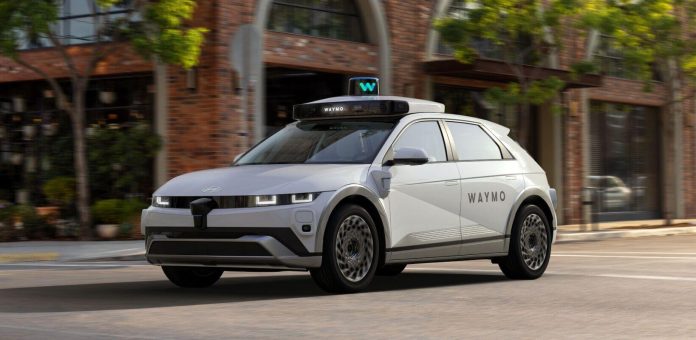
Robotaxis are the most advanced commercial testbed for L4 deployment. Waymo reports roughly half a million weekly orders and is expanding internationally, while Baidu’s Apollo Go (Luobo Kuaipao) logged 3.2 million fully driverless rides in Q1 2026 and reports city‑level break‑even in some markets. Startups such as Pony.ai and WeRide claim unit economics for single vehicles, but company‑level profitability remains elusive: both have reported substantial cumulative losses and their Hong Kong market debuts have tempered investor enthusiasm. The industry consensus is that durable profitability depends on multi‑city fleet scale, a falling ratio of remote safety operators to vehicles, and lower per‑vehicle pre‑installation costs.
Beneath these commercial dynamics lies a faster‑moving technical evolution that threatens to make legacy chip assumptions obsolete. Autonomous‑driving stacks are shifting from CNN‑centric designs to architectures that fuse vision, language and action (VLA), world models, and diffusion transformer (DiT) constructs. These new models are not well served by raw TOPS (tera‑operations per second) metrics alone. Key factors for real‑world inference include memory bandwidth, tiered memory orchestration, specialized functional units, and programmable vector compute—dimensions that favor different chip microarchitectures than the systolic‑array, TOPS‑obsessed designs of the past.
Three chip schools are emerging: large‑core systolic arrays (very efficient at dense matrix math but brittle to data shape and sparse patterns), small‑core many‑core designs (flexible, batch‑1 friendly but die‑area intensive, exemplified by Dojo), and medium‑core hybrids (GPUs with tensor units plus general cores, where Nvidia has found a practical balance). For latency‑sensitive diffusion or world‑model inference with small batch sizes, memory bandwidth and orchestration matter more than peak compute, implying that automakers betting on specific future models are rational to invest in bespoke silicon despite high upfront costs.
That investment wave explains why more automakers and suppliers now develop in‑house chips: Tesla’s iterative FSD silicon, NIO’s Shenji, XPeng’s Turing, Li Auto’s Mach M100, and others. Chip R&D carries heavy up‑front cost and multi‑year cycles, but it signals control over the stack five to eight years out—when today’s architectural bets will matter most. Simultaneously, platform players are moving up the stack: Nvidia bundles DRIVE platforms and models with chips, Huawei pursues full‑stack vertical integration, while Momenta focuses on being the software brain for OEMs.
Regulation and standards are catching up: China’s national intelligent‑vehicle standards and data‑recording rules (with tamper‑resistant logging) are being implemented, and a public safety standard effective July 2026 clarifies technical and data expectations. The combined pressure of market demand, fleet economics, chip architecture shifts and regulatory clarity means the next 18–36 months will determine which players scale and which technical paradigms dominate. Autonomous driving’s imminent “ChatGPT moment” may therefore be less about a single model breakthrough and more about matching new model classes to silicon and business models that can deliver safe, affordable, and widely deployable driverless services.

