
BMW has unveiled a novel hydrogen storage system for its upcoming iX5 Hydrogen that the company says will extend driving range, speed up refuelling and simplify production across multiple X5 variants.
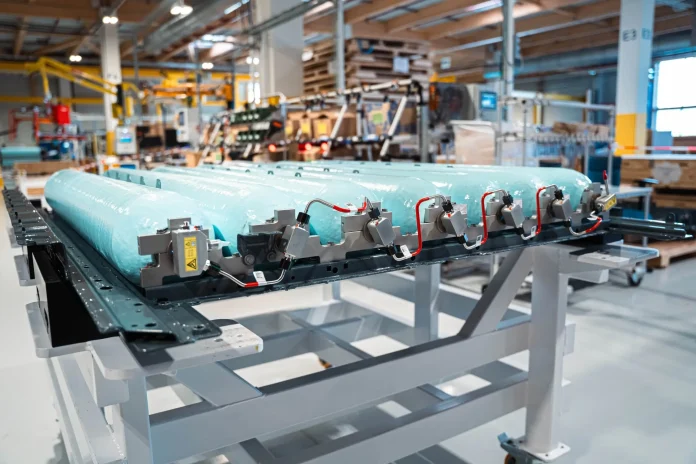
Called the BMW Hydrogen Flat Storage, the system is a seven-tank assembly of carbon-fibre‑reinforced composite pressure vessels arranged in a flat, integrated module. The tanks are connected in parallel within a robust metal frame and controlled by a single central valve; together they store roughly seven kilograms of hydrogen at 700 bar and can be refilled from empty in under five minutes. BMW quotes a prototype range of up to 750 km (about 385 miles).
BMW’s engineers highlight the packaging advantages of the flat geometry: the compact module is designed to fit the X5’s underfloor space efficiently, leaving the cabin and cargo volume uncompromised and enabling the fuel‑cell variant to be produced on the same line as battery-electric, plug‑in hybrid and conventional X5 models. The company calls this a “technology‑open” approach that reduces complexity and increases manufacturing flexibility and scalability.
The new storage system will pair with BMW’s third‑generation fuel cell system (Gen3) and the firm’s Gen6 high‑voltage battery architecture. The fuel cell is the result of continued cooperation with Toyota; while BMW previously sourced full systems from Toyota for early trials, the Gen3 unit represents deeper in‑house development combined with jointly procured core cells. BMW says the third generation is about 25% more compact than its predecessor, with higher power density and improved efficiency that translate into greater range and lower energy consumption.
Prototype fuel cell assemblies are already being built and tested at BMW’s hydrogen competence centre in Munich, with component production and systems integration work underway at the Landshut technology hub. Series production of fuel cell systems is slated to begin in 2028 at BMW Group Plant Steyr, where new test rigs and production facilities are being installed. Landshut will manufacture several hydrogen‑specific components, including housings and pressure plates, and will start constructing hardware for the hydrogen Energy Master — a power‑management unit handling 400–800V systems — in mid‑2026.
BMW presented the flat storage and drivetrain package as part of a broader strategy to offer multiple powertrain options from the same flexible platform. By standardising geometrical specifications for energy storage and drive components, BMW expects synergies in production that lower technical complexity and cost while allowing customers to choose the drive system that best suits their needs.
Safety and durability were also emphasised: the 700‑bar tanks are mechanically protected by vehicle structure, and BMW has filed several patent applications covering the integrated storage concept. The company said the system’s centralised valve arrangement and enclosed multi‑chamber construction contribute to safe, clean and fast refuelling — capabilities crucial to any practical roll‑out of hydrogen passenger cars.
BMW plans to introduce the iX5 Hydrogen into series production in 2028 as part of its technology‑open portfolio, putting a fuel‑cell variant alongside battery electric and traditional internal‑combustion versions of the X5. The move is intended to broaden customer choice, deliver long-range electric driving with rapid refuelling, and reduce dependence on any single energy source as hydrogen infrastructure develops.
Production timing, pricing and market rollout remain to be confirmed; BMW’s announcement frames the developments as the next step toward industrialising hydrogen fuel‑cell technology for mainstream premium vehicles.

